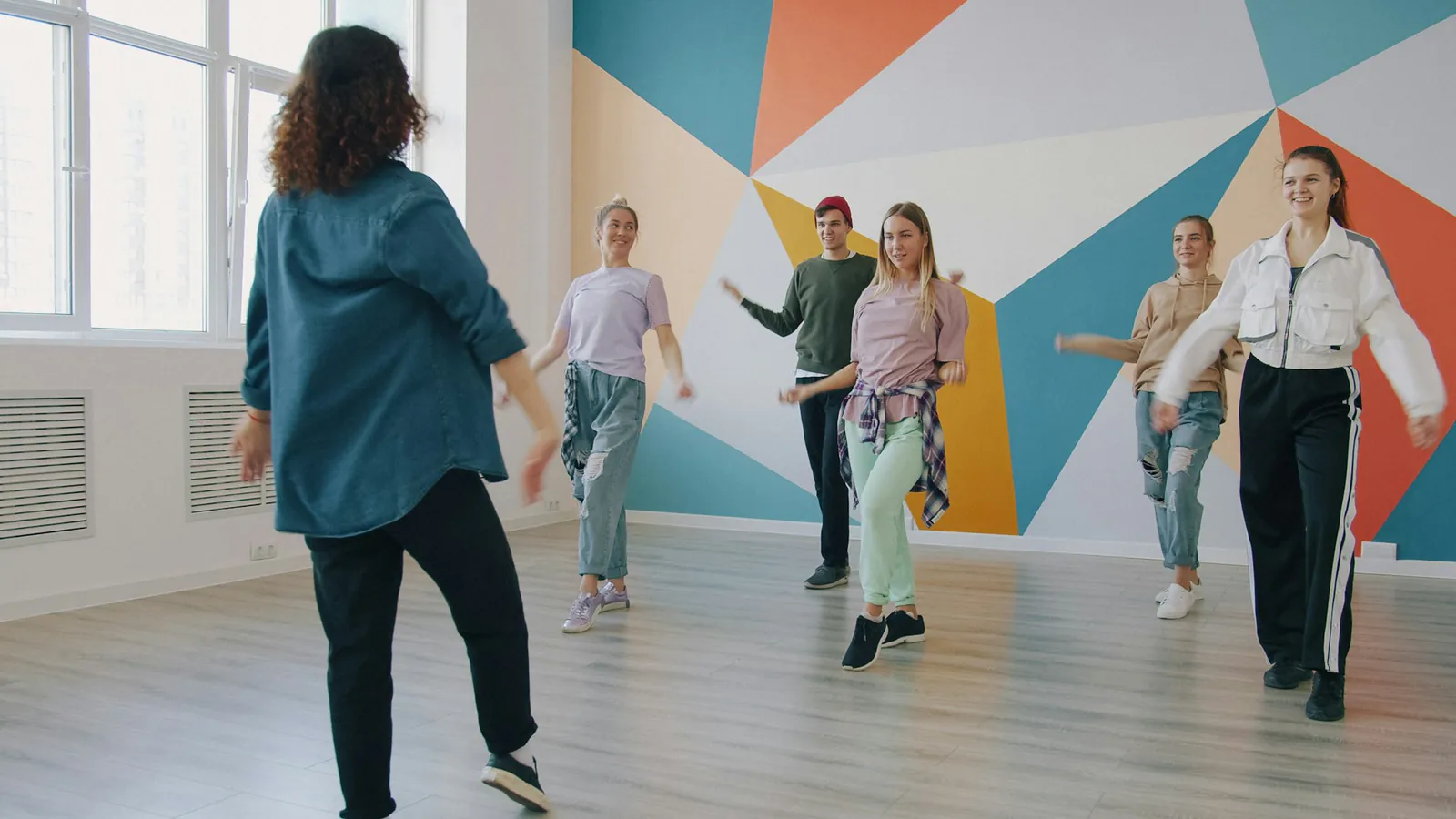
By the time the music starts at a dance party, some of the work has already happened. Edinburgh Swing Dance Society lists setup, the door and taking things down among its volunteer activities, alongside tasks for individual events. Those involved experience an evening beyond the dance floor: welcoming guests, preparing the room and clearing up after the last song. These contributions belong to the same event as the music and the shared dances. They are simply less visible.
Knowledge keeps an event running too
Not every task happens at the venue. Houston Swing Dance Society explicitly names public relations, accounting and its website as areas where people can contribute their knowledge. This broadens the picture of who contributes to a dance scene. Someone can explain an event clearly or prepare its accounts without appearing on stage. Dance ability and organisational skills are different contributions. Getting to know a community can therefore mean discovering people behind the programme whose interests and experience extend well beyond dancing.
Māra Zukure described what this work could feel like in a 2023 interview with Latvian public media outlet LSM. At the Latvian Song and Dance Festival, she had helped assemble an information point in the morning and recorded lost property after the celebrations. Looking back, she connected the long hours with contributing to a shared celebration. This is her personal experience. It helps explain how volunteering can be a way of participating in a dance event in its own right. That enjoyment cannot be promised to everyone beforehand.
Helping shape the scene
Volunteering can also grow from a wish to create different opportunities to dance. Cristine Dyhrberg Højgaard and Liv Egholm followed Copenhagen’s breaking scene in an eighteen-month ethnographic study. They described how B-girls connected personal concerns with shared projects, including the Floetic Flava platform and Girls2Girls festival. A wish to improve women’s access took organisational form. The case documents a particular relationship between personal interests and collective work. Volunteering therefore need not mean setting aside your own wishes as a dancer to serve only other people’s interests.
A new role can also become a place to learn. In a 2020 interview with The Dance Ability Movement, Hinano Toda described volunteering in Canada. English was initially difficult for her, including during everyday tasks in the dance space. She listened to other volunteers and received support from the team. Her experience suggests a practical question about working together: is someone available to explain things when you are unsure what to do? Willingness to help does not replace a clear introduction. Learning needs people who are available for that purpose.
Anyone hoping to gain experience in facilitating dance through volunteering should therefore look closely at the role on offer. People Dancing recommends clarifying learning aims, the knowledge required and the guidance available beforehand. The period involved and any expenses also belong in that conversation. This gives a different starting point from simply offering to help with anything. You might ask whether you will mainly prepare the space or assist with a dance activity under guidance. Both can be worthwhile, but they offer different experiences.
Enthusiasm does not settle the question of pay
Dancer and writer Emmaly Wiederholt described a conflict in her own work on Stance on Dance in 2019. She wanted to earn money from her dance expertise but was again asked to contribute without payment. At the same time, she asked others to write unpaid pieces for her publication. Her self-criticism leaves the tension open. Enjoying dance does not settle the conditions under which someone wants to offer their work. A particular collaboration therefore also needs clarity about whether someone is inviting a voluntary contribution or requesting a professional service.
Sharing tasks and passing on knowledge
An agreed contribution becomes easier to understand when the task has a manageable scope. In workshop notes for the Country Dance & Song Society, Tara Bolker and Maxine Louie distinguish between designing, printing and distributing a flyer. These are separate activities that different people can undertake. They also recommend clear points of contact and documentation for recurring tasks. Someone joining the team then does not have to guess every detail. Passing on knowledge provides a basis for others to take responsibility too.
An agreement also needs to establish where the role ends. The British organisation NCVO recommends clearly described roles and a thoughtful ending when someone finishes volunteering. Feedback, thanks and a handover can be part of that process. Applied to a dance event, agreeing to help on one evening does not automatically mean agreeing to every future one. Someone leaving after a longer period can be asked what knowledge they could pass on. A departure can be part of working well together, while the next person finds their own way to contribute.