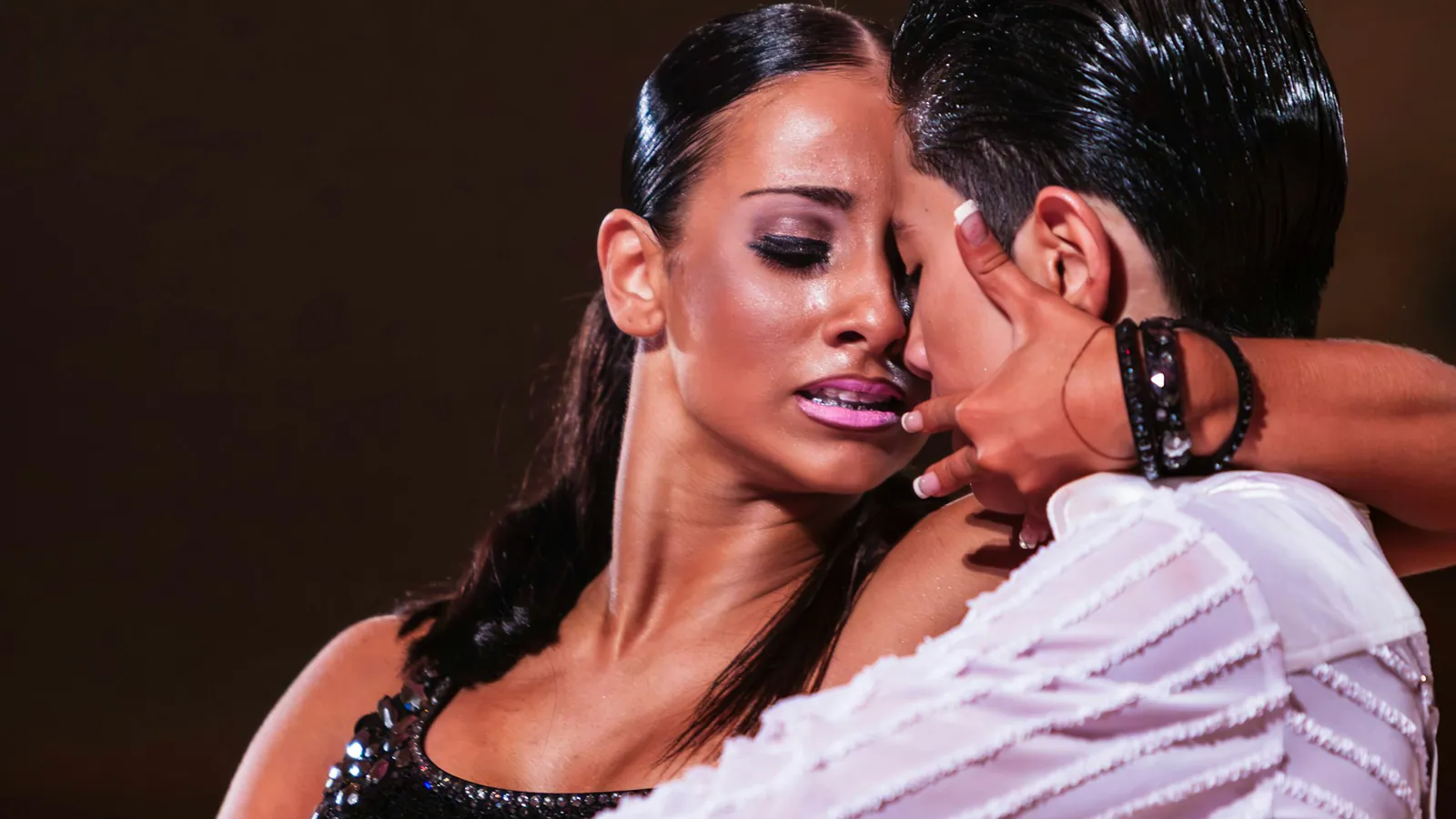
Touch reaches you in a particular situation. Who is there and what you expect can influence how it feels. In dance too, pressure and duration therefore describe only part of the contact.
Valeria Gazzola’s team investigated this in 2012 in a staged dating context: watching videos, 18 heterosexual men believed that a man or a woman stroked their legs. In fact, the same woman delivered the touch without knowing which video the participants were seeing. How pleasant they found the touch differed considerably. The finding concerns this small group and the staged situation.
Relationships and choice
The relationship between people is also associated with the acceptance of touch. In Juulia Suvilehto’s study, 1,368 people from five European countries marked body silhouettes to indicate where different people would be allowed to touch them. Stronger emotional bonds went with larger marked areas on average. These were self-reports; nobody was actually touched. This does not establish a cause of closer relationships.
For dance contact, such averages do not amount to personal permission. Contact within an agreed dance hold also does not establish whether the same touch would be welcome after the dance.
Part of the situation is how much say you have in what happens. Lenka Gorman and her team let young adults choose, among other things, which of two areas on their arm would be touched. In the analysed data from 23 people, touch was rated more pleasant when they had this choice. Merely choosing a glove colour did not show a clear equivalent effect. Everyone had previously consented to participate.
In dance, the question “How does the contact feel?” can therefore also involve “What can I help decide about it?”
What can be communicated through touch
Matthew Hertenstein’s team asked unacquainted students to convey assigned emotions by touching an arm. In experiments in the USA and Spain, some were identified from a response list more often than expected by chance. Stroking was used for love and sympathy. The authors leave open whether emotions or intentions were communicated. Whether participants felt those emotions was not measured.
Imagine a dance sequence: one person uses a hand connection to coordinate movement; the other experiences closeness. The same touch would then have two meanings. One person’s experience does not confirm that the other feels the same.