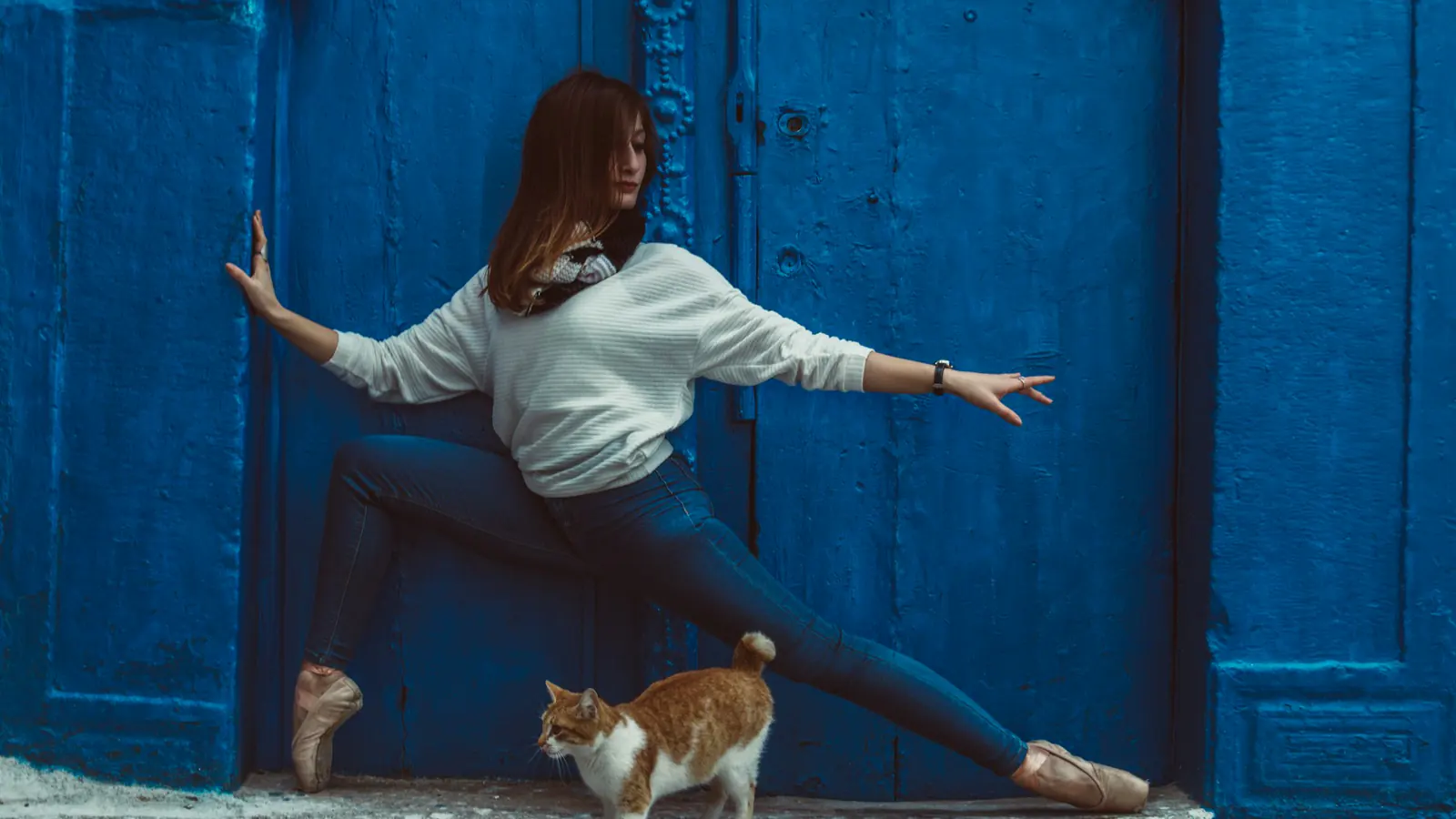
You can love a dance aesthetic without turning it into a dress code for every body. It is worth being precise: do you enjoy a movement, a costume or a particular interaction? Or is someone expected to have a certain physique before the music even starts? Calling all of these things beauty leaves the actual subject of the judgement unclear. Taking artistic standards seriously also means being able to say exactly what those standards concern.
Body image includes your picture of your body and your attitudes towards its characteristics. A body ideal is a standard for how a body should look. Such standards can be conveyed socially and personally adopted, but also rejected. Body, body image and desired appearance are therefore three different things. Finding your own shoulders too broad when you dance already expresses a judgement. Their width alone does not explain why narrower shoulders should count as more beautiful.
When an ideal enters the dance studio
A standard can become quite material: in the costume sizes available or a glance in the mirror. In interviews with twelve teenage competitive dancers in Canada, participants described scrutinising their bodies in mirrors and worrying about costume fit. These are experiences from a group training intensively, not a description of every studio. They illustrate a useful distinction: a costume may be poorly cut for someone. That does not make the body wrong. And looking in a mirror can concern either a movement task or physical appearance.
The supposedly ideal dance body also deserves closer examination. A survey of women and men, dancers and non-dancers, distinguished thin, muscular and athletic appearance. In its questions, athletic meant slim and toned; this did not measure actual movement ability. Experiences concerning clothing were associated with body dissatisfaction in all four groups. The survey establishes neither that tight clothing causes dissatisfaction nor one uniform standard for each gender. For dance imagery, the distinction matters: visible muscle definition describes appearance. Precise timing or carefully coordinated movement together are different things to assess.
Dance Theatre of Harlem offers a concrete example of another way to pursue an aesthetic aim. Its 2026 summer programme dress code requires female dancers’ tights and ballet shoes to match their own skin tone as closely as possible. The reason given is the body’s continuous visual line. This calls for more than one supposedly neutral colour. The example shows how continuity can remain the aim while the colour requirement accommodates different skin tones. These are rules for a particular ballet programme; they create no dress requirement for a social or another production.
Media images deserve a closer look
An image can feel credible even when its visible proportions have been edited. In an experiment, 144 girls aged 14–18 viewed original or altered Instagram selfies. They detected filters more readily than reshaped bodies; both image groups seemed realistic to them. Momentary body evaluations were less favourable after the edited images. This was a brief experiment with adolescents, not an investigation of dance videos or long-term development. A familiar format therefore does not guarantee an unaltered depiction. How an image was made merits attention before using it as a bodily benchmark.
Sporting imagery is not automatically a helpful alternative to beauty ideals. In an experiment with 108 young female university students, selected fitspiration images produced greater immediate body dissatisfaction than travel images. The posts represented fitness partly through bodies posing in sportswear. The study examined this particular selection in a laboratory setting. An appearance of activity is therefore no evidence that an image improves someone’s relationship with their body. When considering a dance post, it is worth asking whether it shows movement or primarily presents a desired physique.
Diversity, in turn, cannot be read from clothing sizes alone. A content analysis of 640 posts that popular body positivity accounts published in 2017 found varied body sizes and frequent messages of body acceptance. Yet the people depicted were predominantly young women; visible disabilities or physical differences were rare. This invites a more precise look: which differences does a selection show, and which remain absent? Broader representation in one respect need not broaden every other. The study describes content on those accounts at that time. This analysis did not test how viewers felt.
In a separate experiment with 195 young women, body positivity posts improved momentary body satisfaction. Yet participants subsequently described themselves through their appearance more often than after neutral nature images. Appearance featured similarly often after thin-ideal images, although self-descriptions following body positive posts were more positive. Feeling more beautiful and describing oneself less through appearance are therefore different outcomes. The study measured immediate responses to selected posts, not long-term development. This finding helps distinguish two aims: a kinder view of beauty and more room for other qualities.
Body diversity as an artistic choice
On stage, representation raises another question: which bodies and movement possibilities become part of a work? In Candoco’s educational resource, then artistic directors Stine Nilsen and Pedro Machado discuss selecting disabled and non-disabled dancers. Their criteria include curiosity, imagination and clarity of movement. Different physical characteristics sit alongside specific artistic requirements. In the approach they describe, diversity does not mean abandoning skill. It changes which abilities a company seeks and how it develops its work with different people.
A beauty ideal can also become the subject of a work. Silvia Gribaudi’s GRACES refers to Antonio Canova’s sculpture of the Three Graces. Three male dancers and Gribaudi herself encounter that historical reference on stage. Her work description centres humour and questions of beauty, gender roles and virtuosity. An inherited ideal becomes artistic material to play with. That offers a different possibility from requiring everyone to meet another new ideal. The description sets out the work’s intention; it does not establish that every audience changes its ideas of beauty.
Dancing with your own body
Constant enthusiasm for every detail is not a prerequisite for a positive body image. Research distinguishes appreciation and acceptance from having to like everything about your appearance at every moment. Enjoying clothes and personal presentation can belong within it. This leaves room for an ordinary approach: you may choose a costume you like while wishing some bodily features were different. Neither compulsory self-love nor giving up beauty needs to follow. This conceptual account describes a possible relationship with the body; it does not promise that dissatisfaction will disappear.
Body functionality offers another perspective. In body image researcher Jessica Alleva’s Expand Your Horizon programme, it includes movement alongside sensory experience, internal processes, communication and creative activities. The focus is on what someone’s own body enables, without ranking its performance against other bodies. Applied to dance, attention might turn to music heard or a variation someone creates. A particular physique or the greatest range of movement is not the conceptual goal. This perspective does not explain away physical differences. It broadens what we can discuss when appreciating a body.
The way we talk about dance deserves the same precision. A musical accent, a costume in a favourite colour and a preferred silhouette are different things. You may have different preferences about each. Personal taste alone, however, creates no rule about who may dance. An interesting discussion of beauty can begin here: which form delights me, what effect am I seeking, and what exactly am I discussing? This leaves room for aesthetic choices without confining a person to a preferred appearance.