Psychological wellbeing involves more than a good mood. It includes satisfaction with life, supportive relationships and a sense of being able to shape everyday life. Research distinguishes these emotional, personal and social dimensions. Psychological difficulties and positive life experiences can coexist.
For dance, this means that enjoying an evening is a particular experience. By itself, it cannot tell us whether someone feels connected, capable of acting or satisfied with life over a longer period. An enjoyable dance can belong in that picture; it does not answer every question about how a person is doing.
How a dance feels
Even the immediate feeling has several dimensions. Being less tense after dancing does not automatically mean feeling happier or more energetic. A study of 105 ballroom dancers illustrates this: pleasant feelings increased after dancing in the recreational group but decreased after a competition. Tension fell across the groups.
However, the existing groups also differed in age and training volume. Competition cannot therefore be identified as the sole cause. For your own evening of dancing, the distinction is still useful: relief, pleasure and tiredness need not tell the same story.
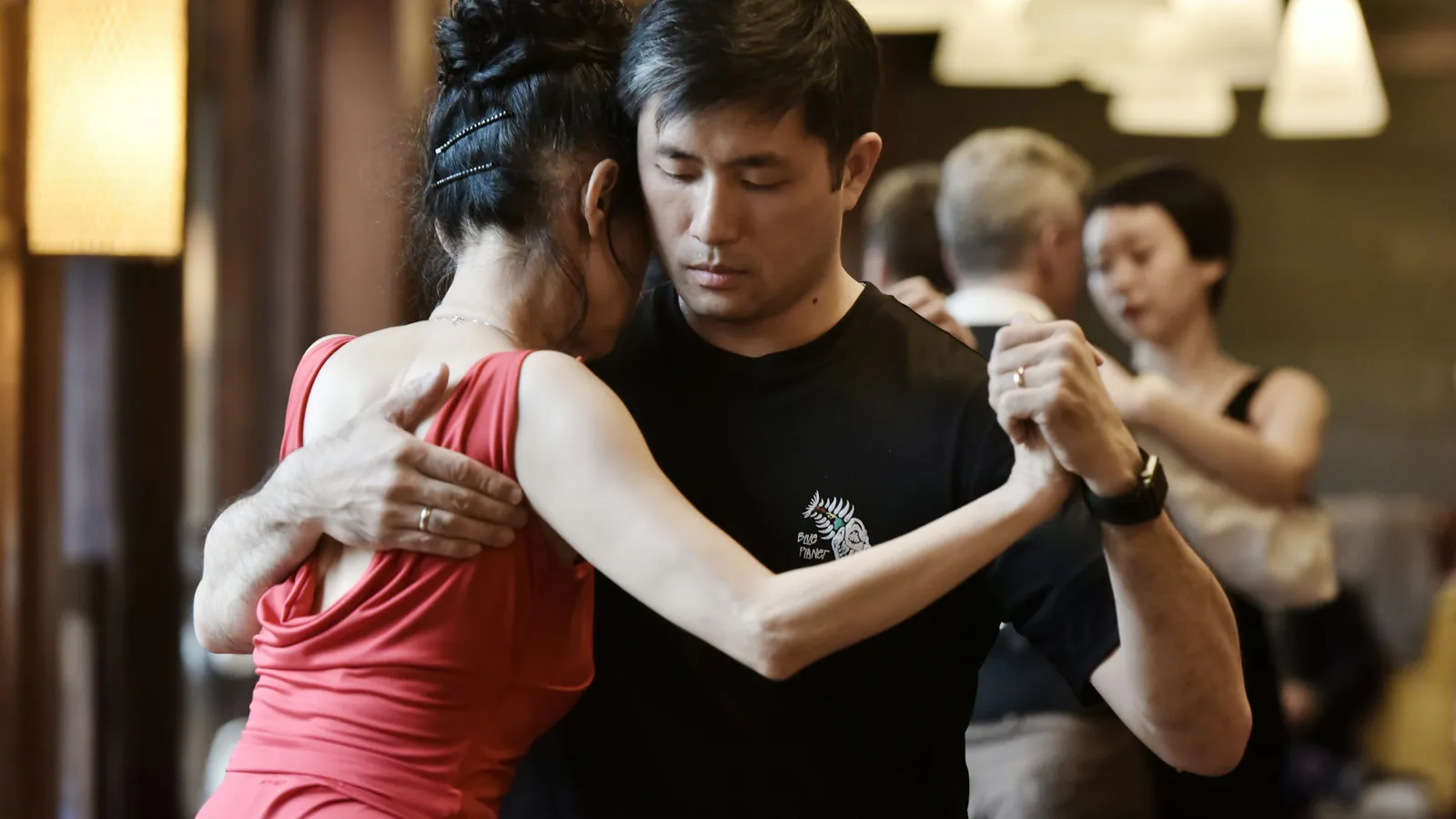
The experience also involves more than movement alone. Music and a partner change the setting. A study of 22 experienced tango dancers therefore compared dancing with and without music, and with and without a partner. Music and a partner together were associated with the greatest increase in pleasant feelings.
The small study used a fixed sequence of conditions, repeating ordinary tango dancing at the beginning and end. This limits causal interpretation. The finding does suggest considering the emotional experience in the context of the whole dance situation.
Why stress can give two answers
Feeling relieved after dancing initially describes your experience. It provides no hormone measurement. In a study of existing college classes, perceived stress decreased after a dance class while salivary cortisol increased. After yoga, both measures decreased.
These were immediate measurements in healthy young students without random allocation to classes. They did not test longer-term changes. The different directions show why a general claim about reducing stress hormones is too broad. There is no need to doubt the relief you feel; it answers a different question from the saliva sample.
From an enjoyable evening to treatment
For persistent symptoms, asking about mood immediately after dancing is not enough. What a programme was compared with becomes crucial. A randomised study of tango, meditation and a waiting list found more favourable depressive symptom scores in both active groups than in the waiting group after six weeks.
However, only 66 of the 97 people allocated to groups were analysed. Clinical diagnoses and medication had not been recorded; symptoms were self-reported. The findings therefore concern this programme and its participants. Without a later follow-up, how long the change lasted remains unknown.
Dance movement therapy creates a different setting: professionals support movement and expression and discuss the experiences that emerge. A Finnish study investigated this group treatment alongside existing care among 109 participants with diagnosed depression. Their self-reported outcomes improved more than with usual care alone.
Almost all participants were women; 29 per cent of responses were missing at the three-month follow-up. This was a therapeutic setting involving trained dance movement therapists and ongoing treatments. An ordinary dance class does not take on that role simply because people move and express themselves there.
When difficulties persist in everyday life
When low mood or a loss of interest and pleasure persist and interfere with daily life, talking to a doctor or mental health professional is worthwhile. This means considering how difficulties develop, their impact and possible causes. Individual experiences on a dance floor cannot provide a diagnosis.
To support someone, you can listen, remain patient and invite them to spend time together. Applied to dancing, that can be an invitation without expecting immediate improvement. Support can also mean helping someone access professional care. This leaves room for shared activities while taking their difficulties seriously.