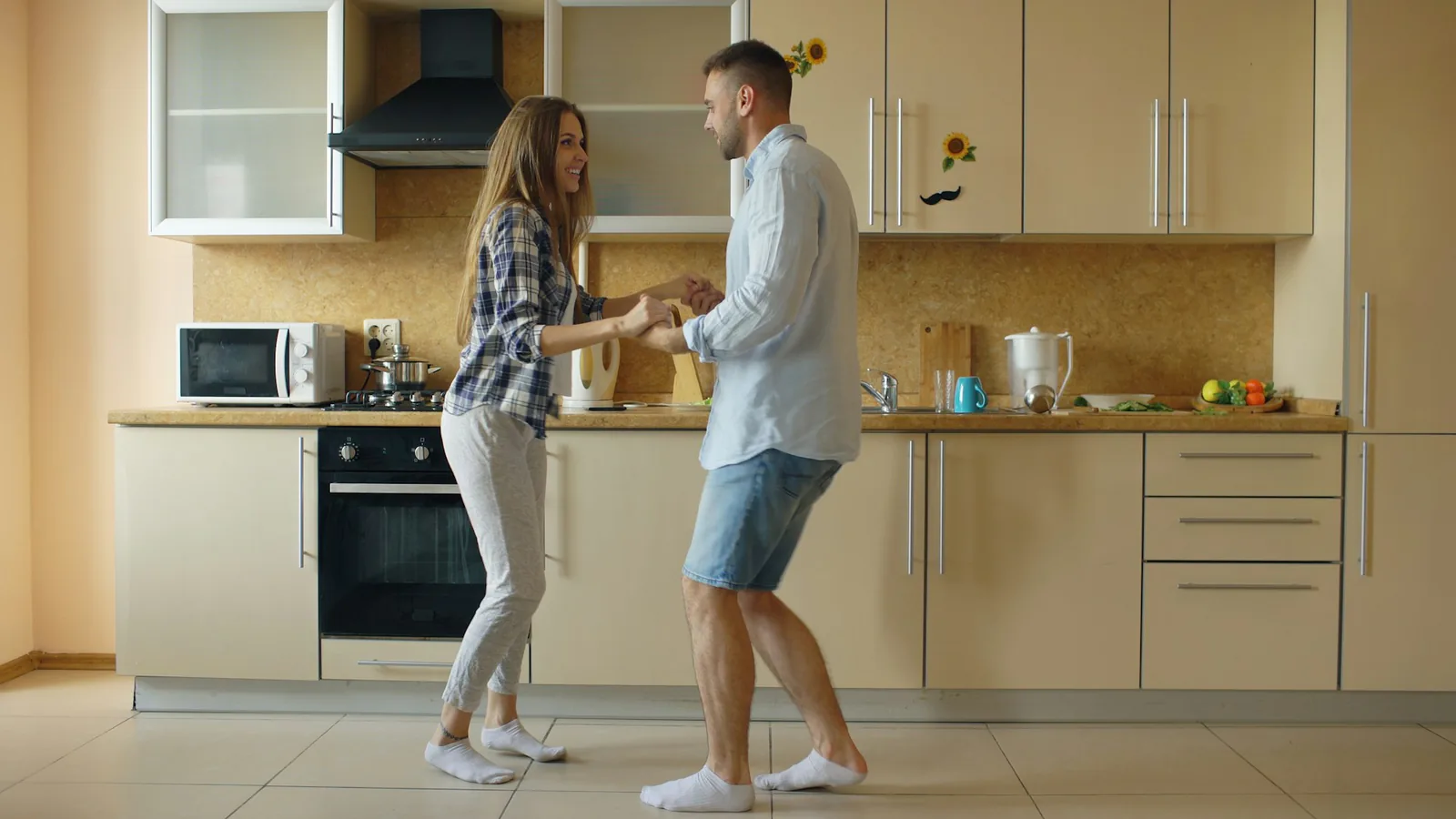
A dance can be many things at once: movement after a day at a desk, an exploration of music, a demanding hobby or an encounter with other people. Sometimes the pleasure of a song comes first; sometimes it is curiosity about a new movement. The pleasure of dancing can also prompt an interest in what this activity means for your body and wellbeing.
Part of the answer lies in physical activity. Alongside it come tasks for attention and memory, opportunities for expression and shared experiences. Targeted dance programmes have produced research findings on some health effects. Other aspects can initially be described as personal experiences or possible explanations. This combination makes dancing interesting: one activity can touch several areas of life.
Movement that finds a place in everyday life
Dancing counts as physical activity because muscles work and use energy. Depending on the dance form and how it is performed, footwork, changes of direction, small shifts and more extensive movements alternate. A quiet passage can be followed by a more active one. How demanding this becomes depends partly on tempo, movement size, duration and your own physical starting point. The same song therefore does not necessarily challenge two people equally.
Regular physical activity has well-established health benefits, including for the cardiovascular system and physical fitness. Dancing can contribute to these. However, a class with explanations and interruptions contains a different amount of actual movement from a continuously danced section. What you physically do matters when considering the activity. A fixed calorie figure for “an hour of dancing” would hardly capture these differences.
It is also interesting to consider the place movement takes in your own life. Perhaps you enjoy music and like arranging to meet people for dancing. The occasion then has a purpose beyond an intention to exercise. Whether it becomes regular also depends on accessible opportunities, time and a suitable environment. Enjoyment can be a personal reason to return. You can choose the music, dance form and group according to your own preferences.
Health benefits do not have to begin only at the end of a large undertaking. Small amounts of physical activity count too. Dancing can sit alongside walking, cycling or other forms of movement. The combination that suits you does not need to match a single image of an active life.
Balance and movement throughout the body
While dancing, you organise your body in space. You transfer weight, change direction or finish a turn facing somewhere new. In a familiar variation of a Brazilian Zouk fundamental, the position of your feet, movement through the rest of your body and orientation towards your partner come together. At one moment, precise footwork comes to the fore; at another, it is a change of orientation or the coordination of several movements.
Structured dance programmes have investigated balance, walking and other physical functions. Various studies involving people in middle and later life reported improvements. The results were not consistent throughout: health conditions, dance programmes and comparison activities differed. It is therefore reasonable to describe possible improvements in physical function without assuming the same effect for every style.
The question a study answers matters too. A change in performance on a balance test is a different result from fewer actual falls. For example, a large, twelve-month social dance programme involving older people did not reduce the rate of falls. The physical demands of an activity and its usefulness for a particular health concern need to fit together.
Within your own dancing, awareness of movement can also become interesting. You might notice that one direction feels more familiar than another, or that you can perform a movement at different sizes. These discoveries are initially experiences with your body. They can show you which possibilities you have used in a movement so far and what still interests you about it.
Attention receives a task in motion
Dancing a combination means connecting several pieces of information. You remember a sequence, listen to the song and orient yourself in the room. In partner dancing, coordination with another person is added. If something develops differently from what you expected, you have to decide how to continue together. This describes specific demands of dancing; it does not yet tell us whether every mental ability in everyday life improves as a result.
Familiar material can also engage your attention in different ways. On one occasion, the order of a combination interests you; on another, the shape of a musical phrase. In free dancing, a change in the music can prompt a new decision. This is not always about handling as many tasks as possible at once. Simple movement content can leave enough room to notice something particular more closely.
Studies of dance interventions have found some improvements in memory measures. Many comparisons with other movement programmes also showed no differences. This creates an interesting field of research with limited findings about particular abilities. It does not establish that dancing prevents dementia or produces a general increase in intelligence.
The activity itself can remain appealing regardless. You learn something that becomes understandable through doing: a remembered sequence becomes movement, and a rhythm you hear receives a physical response. For people who enjoy learning through music or movement, this way of engaging can have value of its own.
Music and expression change the experience
Dancing to a song is a different experience from performing the same movement without a personal connection. Perhaps a voice draws you in; perhaps it is a rhythmic line. You can respond quietly to a passage, play with an accent or shape a familiar movement differently. This is a relationship with music that cannot be reduced to the number of figures or the physical effort involved.
What you feel can vary. A dance can bring pleasure, spark curiosity or allow a moment of concentration. Sometimes a difficult passage remains frustrating, and sometimes a song simply does not fit your mood. Enthusiasm for dancing therefore needs no promise that every session will make you happy or reliably shut out everyday concerns.
Research into structured dance programmes also reports some positive findings for psychological wellbeing. Overall, differing programmes, frequently small or methodologically weaker studies and limited follow-up restrict the conclusions. A general advantage over other physical activity has not been established. Dancing can contribute to personal wellbeing; that does not make an ordinary dance class a treatment for mental illness.
Often, the personal value can be expressed more directly: you spent an hour enjoying movement. A song became more meaningful to you. Or you created something that felt right to you. These experiences deserve to be taken seriously as experiences. Perhaps you want to hear the music again later or develop an idea from this dance. A single moment can then remain part of your interest beyond the evening.
For many people, dancing includes meeting others
Dancing together creates opportunities to do something with other people. You can communicate about a song, discover a movement together or begin a conversation after a dance. The encounter already has a shared subject. This can be pleasant even when you did not arrive intending to make new friends.
An experiment with Brazilian school students investigated the experience of moving together. After ten minutes, participants in synchronised or more physically demanding conditions reported greater connection with the people directly involved. The finding concerns that short experiment. It shows neither that lasting relationships develop from it nor that dancing resolves loneliness in general.
For a longer-term social experience, the actual setting matters. Repeated encounters offer time to get to know people. At the same time, how people treat one another shapes whether a place feels welcoming: whether boundaries are respected, different starting points have room and contact remains voluntary. A shared rhythm can be part of an encounter; trust develops through further interaction.
This does not require the closest possible physical contact. Solo dancing in a group, listening together or talking at the edge of the floor can also belong to the social experience of an evening. People seek different forms of contact within it. The value lies in finding a suitable opportunity.
How health and enjoyment can come together
When several of these aspects meet, dancing can find a particular place in everyday life. You move, engage with something new and perhaps share time with others. Which aspect matters most can change. After a quiet week, meeting people may be important; on another day, you might mainly want to experience music physically.
A suitable form of dancing also takes account of how you feel today and what level of effort fits you. You can make deliberate choices about duration, movements and breaks. With a health limitation, professional advice can help identify an appropriate setting. The activity then fits the person doing it. A quiet dance and a more active session can suit different days and needs.
You can choose dancing for pleasure while also being interested in its potential health benefits. Perhaps it becomes a regular form of movement, a new interest or a place to meet people. A song you enjoy moving to can be enough to begin. Whether alone at home, in a group or with a partner, what matters is which form you would like to return to in your own everyday life.