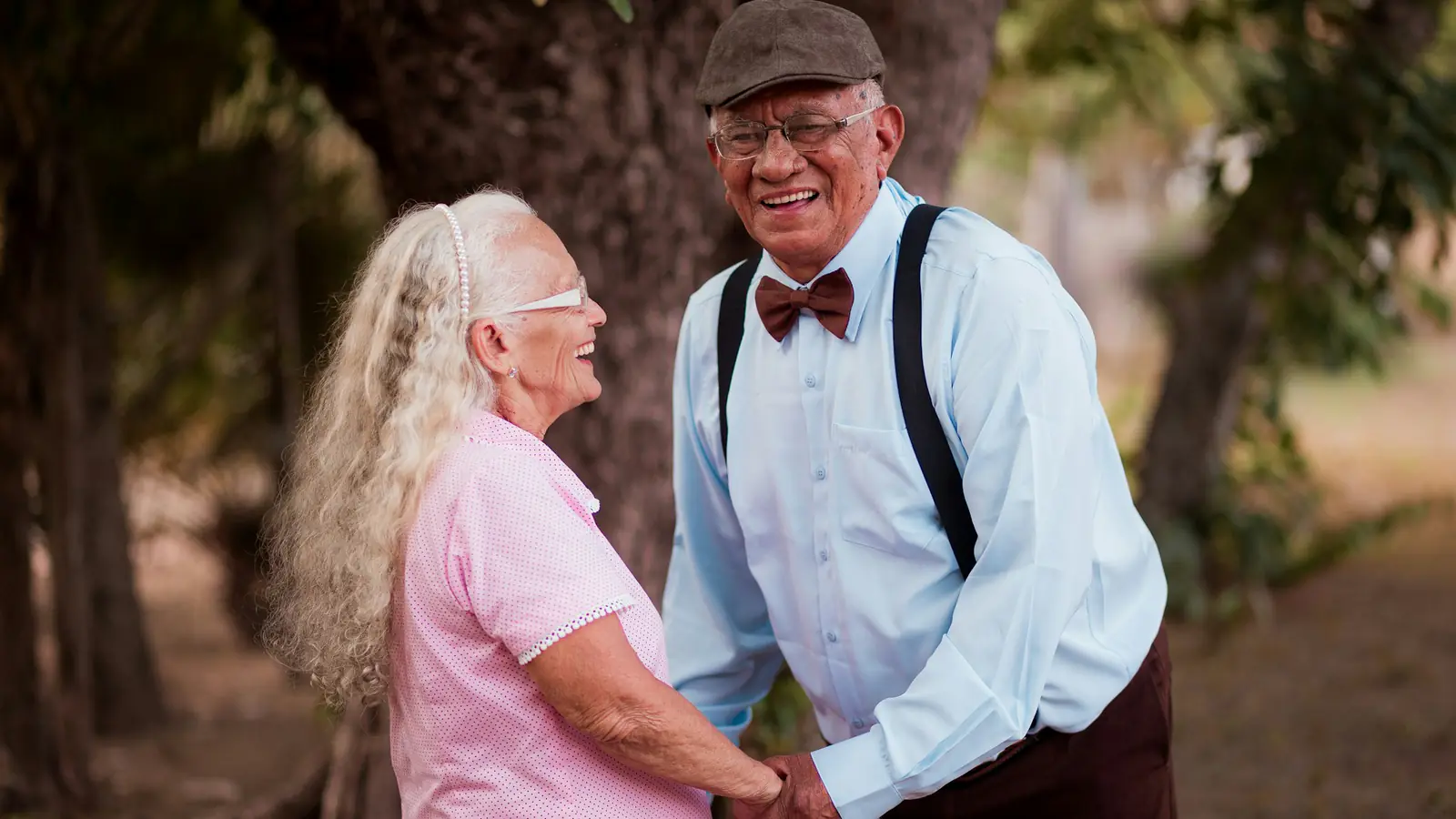
Learning a choreography for the first time at seventy, or remaining curious after decades on the dance floor: both belong to dance in later life. A birth year tells us little about someone’s experience, wishes or physical capabilities. The World Health Organization describes ageing as an uneven process shaped partly by people’s living conditions. Abilities and wishes can continue to change later in life.
This offers a useful starting point for dance opportunities. An age label cannot describe what an activity actually involves. Finding a suitable setting means considering personal interests alongside the environment in which those interests can take shape.
What physical studies measure
In a US study published in 2022, 64 people over 65 joined dance, ukulele or discussion groups. Participants needed to arrange their own transport. Dancing included bachata, rumba and waltz. All three groups met regularly over ten weeks. Researchers assessed standing, walking and rising from a chair. Overall physical scores increased during the study, without a demonstrated advantage for the dance group over the others. Familiarity with repeated tests might also have contributed. These tasks assess particular functions. They tell us neither how someone dances nor which activity matters most to that person.
A Danish project combined Cuban salsa and improvisation. Among 32 women completing twelve weeks, results improved in physical tests including arm curls. There was no control group, and participants could continue other sporting activities. Monthly in-person meetings were also part of the programme.
Dafna Merom’s team in Australia asked a different question: would a dance programme actually reduce falls? The study, published in 2016, involved 530 people from retirement villages for independently living older adults. Eligibility included being able to walk 50 metres. Medical clearance was required for participation. Folk or ballroom dancing was offered over twelve months; average attendance was 51 per cent of sessions. Fall rates did not demonstrably decrease compared with the control group. The planned programme and actual participation therefore describe different things. This trial provides no basis for relying on that dance programme as protection against falls.
Getting into the room matters
The Generations Dancing project in Bedford shows how participation depends on circumstances beyond the dance floor. Older adults and children worked with dance and photography for eleven weeks. Part of the programme later moved to the university. Taxis were arranged, but a walk remained between the drop-off point and the venue. Combined with summer heat, this became a barrier for some older participants. Interviews also described enjoyment of the dancing itself. Someone who misses a session may still care deeply about its content. Accessibility includes the final stretch of the journey.
The Danish project illustrates another possibility: online classes could be followed at home or together in local centres. Some valued flexibility at home, many enjoyed the group setting. Recordings could be replayed but offered no immediate instructor feedback. The study, published in 2024, shows how differently an apparently identical format can be organised.
Belonging to a dance community
An accessible dance evening also has social conditions. In Sweden, Eva Alfredsson Olsson and Satu Heikkinen interviewed 44 people aged 52 to 81 about their dance experiences. Alongside joy and pride, participants described rejection and difficulties rejoining a familiar circle after a prolonged absence. These interviews concern particular partner-dance settings; they do not represent older people generally. They do show that belonging needs attention. For a welcoming dance community, this includes how people are received when they return after time away.
Bringing personal ideas to the stage
Dancing can also mean helping to create a work. At London’s Sadler’s Wells, Company of Elders brings non-professional dancers aged sixty and over together with professional choreographers. For the 2025 production They Look Like People, the programme explicitly credits the company with co-choreographing and co-writing alongside John-William Watson. Artistic co-authorship becomes tangible: members contribute to shaping the piece. This example adds another activity to our understanding of dance in later life, one that physical function tests do not assess: making a personal contribution to a performance.
The choice remains yours
The United Nations Principles for Older Persons connect cultural access with personal fulfilment and participation in decisions. Applied to dance, this suggests that people should help determine the place it has in their lives. One person wants to develop choreography; another wants to share music with familiar people. Watching, taking a break or choosing a different activity can also be personal choices. Opportunities should remain available without becoming an obligation to participate. A dance opportunity takes on personal value through its fit with the interests of the person choosing it.