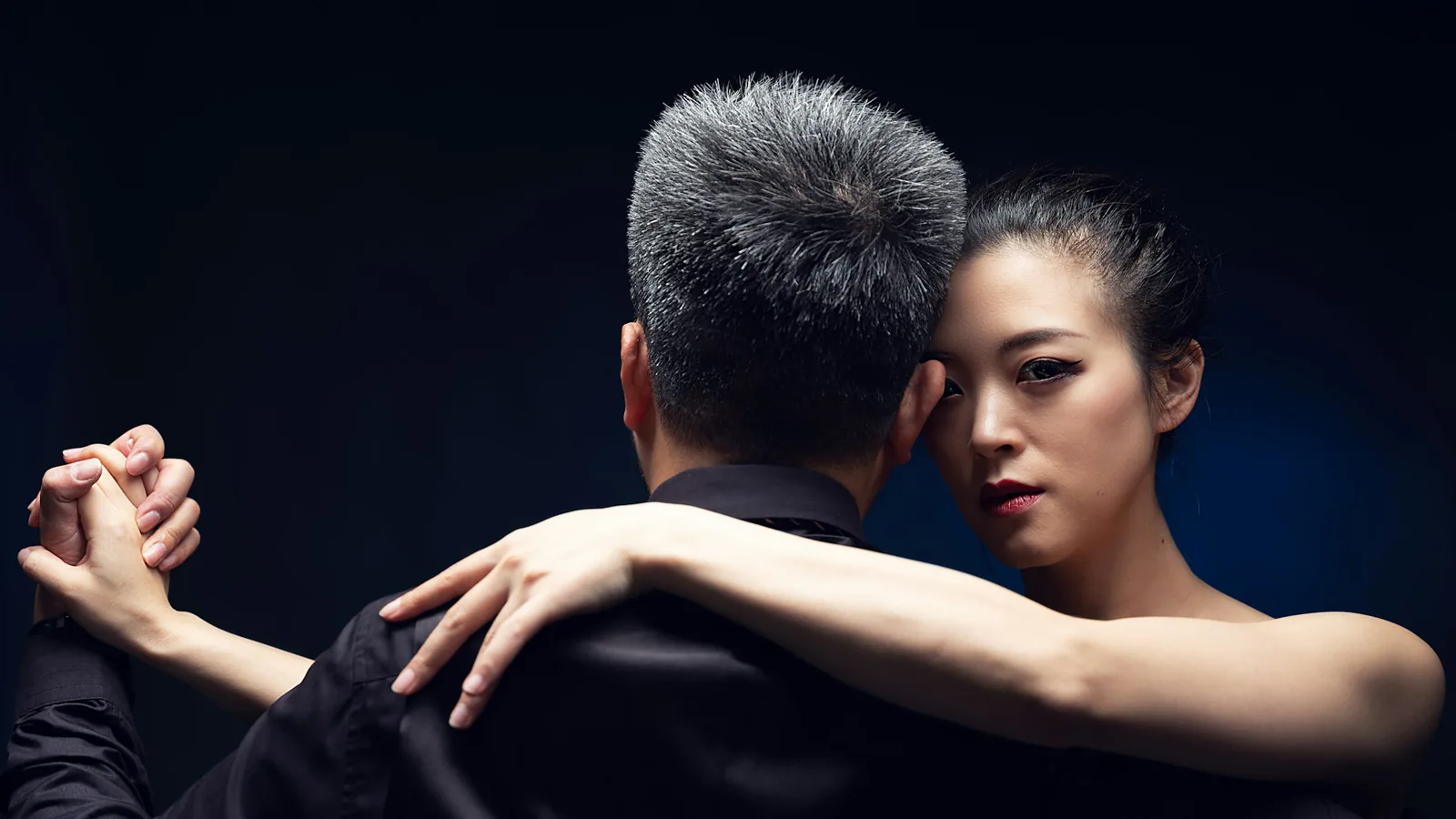
A song begins, and you have something in mind: dancing a familiar basic variation so that its ending meets a musical accent. Your partner offers a different direction, and the space beside you narrows. What deserves your attention now? That question is more specific than an instruction to concentrate harder. It concerns your intention, your communication and the space you occupy together. Afterwards, you may also wonder why this dance felt right. To explore that, it helps to distinguish attention from flow.
What deserves your attention right now?
In his model, Christopher Wickens does not describe attention as a single reserve from which every task takes an equal share. He distinguishes several resources: tasks may involve the same spatial processing or perceptual channel and therefore interfere more strongly. Different channels still do not allow unlimited parallel activity. Difficulty and priorities matter too. For dancing, this suggests a more precise question: what are you trying to process simultaneously? Hearing music, understanding a spoken correction and planning a new combination make different demands. This theoretical article did not test their particular competition in Zouk.
Selection also means that something visible can go unnoticed. Simons and Chabris asked people to count basketball passes in videos while another person unexpectedly crossed the scene. Of 192 participants analysed, 46 per cent did not notice that event. Detection depended partly on the counting task and similarity to the attended team. This was a video experiment, not a study of crowded dance floors. It nevertheless explains why “It was right in front of you” does not prove conscious awareness. Concentrating intensely on one task and overlooking something else are compatible.
For the couple at the beginning, one possible order is: leave enough space, respond to the other person, then pursue the musical idea. The planned accent is an offer, not an entitlement to execute it. Even a carefully prepared intention does not justify pulling someone through a figure. This order expresses a choice about how we want to dance together. It requires neither a spectacular moment nor proof that the original plan was carried through.
What should remain conscious?
Closely monitoring a movement does not always help equally. In a football experiment by Beilock and colleagues, ten experienced players and ten novices dribbled through a course. They either monitored foot contact or tracked words alongside the task. Experienced players were slower with their preferred foot when consciously monitoring it; with their less practised foot, that pattern reversed. Novices benefited from movement focus. Proficiency was therefore task-specific. The experiment tested immediate execution, not learning. Applied to dance, this challenges a blanket instruction to switch off your mind: familiarity with this particular variation matters beyond your overall level.
Attention need not choose between isolated body parts and the outside world. Gose and Abraham propose giving greater consideration to relationships between body, task and environment in movement research. A distance, for example, connects your hand with a target; it belongs neither exclusively inside nor outside. In partner dancing, the available space between two people would be such a relationship. This is a theoretical extension, not a teaching method proven superior. For our question, it offers a way to name attention more precisely: a shared spatial task rather than simply an isolated body part.
A suitable phrase does not guarantee a better result, however. In an experiment by Chua, Sproule and Timmons, thirteen skilled dancers performed single pirouettes: without an additional instruction, with a bodily focus, or attending to effects involving floor and ceiling. Sway, balance duration and movement form did not differ significantly. Preferred instructions did not reliably match the best measured performance. This small sample cannot establish equivalence. It does distinguish two questions: what feels suitable, and what changes execution? Musicality, flow and long-term learning were not tested; neither was the idea of one focus per song.
What do you mean by flow?
Flow means more than concentrated work: rewarding absorption accompanied by a sense of effortless control. In their research framework, Durcan and colleagues insist on separating conditions from experience. Suitable challenge, clear goals and feedback may describe conditions; they do not establish that flow occurred. Good performance alone is insufficient too. Their contribution develops proposals for experiments, not a tested method for producing the state. For dancers, this distinction matters: a familiar combination, a clear musical task and a successful ending do not tell us whether someone became absorbed. The term describes an experience, not an external checklist.
Interviews with ten adult female recreational ballet dancers in Lima show how personally this experience can be described. Music, presence and trust in their execution carried different meanings in their accounts. The qualitative study explores these descriptions; it establishes neither their frequency nor a cause of flow. That makes it relevant to conversations about dancing. “I was completely absorbed” can express something different from “The transitions flowed.” Asking about the actual experience preserves that distinction. Visible continuity of movement and absorption in the activity should not be treated as identical simply because they share a word.
Nor does an effortless experience mean physical rest. In a stage study of sixty pre-professional and professional dancers, high retrospective flow reports accompanied a higher heart rate than during rest. The performances were rehearsed, not spontaneous social dances. The study provides no personal flow test: movement, posture and breathing limit interpretation of the physiological measurements. A demanding dance can therefore feel natural without requiring little work from the body. When you say “easy”, precision helps: was communication easy, did movement look effortless, or did you experience little physical demand? These are different claims.
Must a good dance feel effortless?
Successful action can also involve conscious management. Swann and colleagues examined accounts from sixteen athletes of particularly good performances under pressure. They described deliberate concentration and intense effort while individual skills could run automatically. The researchers distinguished this experience, termed “clutch”, from effortless flow. The level of control matters: deliberately managing a performance differs from monitoring every movement component. These interviews do not establish that identical states occur in dancing. They do offer grounds for avoiding a single-state account of good execution. Conscious performance management and automatic skills can be described together.
What we recognise as successful is also an artistic decision. A deliberately interrupted movement may be exactly what you want to show. A surprise can change the expected sequence. If you judged only smoothness, both might fall outside your criteria. The artistic intention can be named first: should this passage be quiet, resistant, playful or surprising? You can choose which of those qualities interests you. A conversation about attention should leave room for that decision too.
What remains open between two people?
Shared flow also needs closer examination. After group improvisations, sixteen contemporary dance students marked remembered flow periods on video. The calculated overlaps between individual reports rarely persisted. With attention directed towards the environment, this group measure was higher than with an internal focus only later in the session; initially, there was no difference. The small study measures no shared consciousness and establishes no general social dance rule. For couples, this warrants restraint: a coherent shared sequence does not prove identical inner experience. You can describe the passage you enjoyed without also speaking for your partner.
After the song, you can return to your original intention with a simple question: would you like to explore that musical idea again? Perhaps it still appeals; perhaps your partner offered something more interesting. Both can be understood as artistic freedom in partner dancing. A focus can invite closer attention to how something is shaped. It should not become a contract that two people must fulfil against the course of their encounter. The planned accent can wait. Your partner is already there.