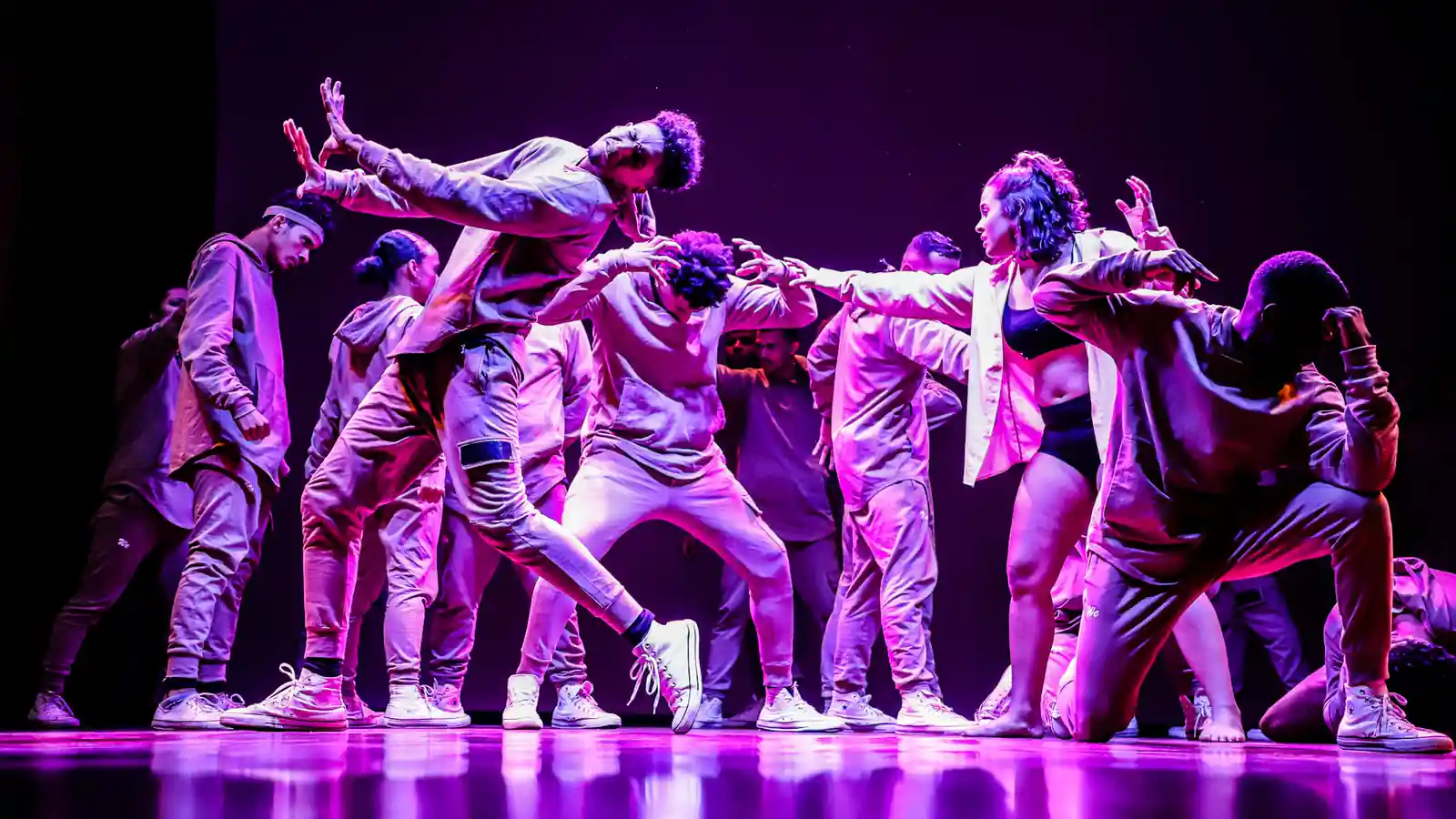
Imagine a song whose accompaniment suddenly drops out. A moment ago, bass, drums and voice were working closely together. Now only the voice remains for a moment. On the dance floor, this change can feel larger than a new chorus: a familiar movement gains space, a small gesture becomes noticeable, and the next entrance begins to feel expected.
Moments like these belong to the shaping of music. Leaving something out also has a duration, a position and a relationship to what sounded before it. Partner dance adds two people who hear the change and respond together. A pause can bring tension, lightness or calm to a dance. Its effect depends on the musical context and the movement the two people are already sharing.
An absent sound has a duration, too
In musical notation, a rest represents a period during which the particular part plays no note. Its duration is specified in note values just as precisely as a sounding note. The Open University's introduction to music theory explains this through different rest symbols and ways of extending them. In that account, a rest is musical material with a defined duration.
This does not mean that everything becomes silent. A singer can fall quiet while the band continues. A drum pattern can finish while a chord rings out. Even when no new notes are struck, resonance and reverberation may remain audible. For dancing, it is useful to distinguish a rest in one part from an interruption affecting the whole musical texture.
The word break also needs its context. It is used differently across musical and dancing settings. It might refer to a conspicuous interruption of the accompaniment, for example. The term alone establishes neither a fixed length nor complete silence. When discussing a particular song, it is often more precise to describe what drops out, what continues and how the music returns.
This attention changes the way we listen. A moment with fewer instruments can feel open while the music continues. An actual interruption can be very short and still stand out. Both can become interesting in dance without requiring the same response.
The pulse can continue when the sound disappears
A song's regular pulse and its individual sounding notes are different things. You can hear an even reference in time without an instrument playing on every beat. After several repetitions, it may be possible to keep following this pattern when the accompaniment briefly falls away.
Imagine a short interruption between two familiar musical sections. The couple is still moving at the previous section's tempo. A weight transfer can gradually settle while both expect the next entrance. Less movement is visible from outside, yet the relationship with the music's timing remains.
This helps explain why outward stillness and musical connection describe different things. Someone can barely travel and still make an entrance clearly visible. A larger movement can also carry across the interruption. Its duration then connects the end of one section with the beginning of the next.
How readily this development can be anticipated depends on the arrangement and on familiarity with the song. A recurring break offers different clues from an unexpected ending. In partner dance, it therefore remains useful to be able to reduce an idea that has already begun or let it resolve differently.
Why a brief moment can attract so much attention
An interruption takes its effect from its surroundings. After a dense musical section, one sustained note changes the texture considerably. In an already sparse passage, the same note may be unobtrusive. A musical accent can therefore consist of something familiar being absent.
A narrowly defined finding from perception research offers an interesting connection. In seven experiments published in 2023, Rui Zhe Goh, Ian Phillips and Chaz Firestone examined how people perceive the timing of silence. Under their experimental conditions, one continuous silence seemed longer than two interruptions of the same total duration. They interpreted their results as evidence that silence can be processed as an auditory event. These were experimental listening situations; the work does not establish the emotional effects of musical pauses in dance.
For shaping a dance, a simpler observation is useful first: an interruption acquires meaning through what it interrupts. If every musical change receives a figure of the same scale, the movements carry similar weight relative to each other. A smaller range of movement can instead make the next expansive passage stand out more clearly.
This can happen without a spectacular pose. A couple travels farther at the start of a section. Towards its end, the travelling becomes smaller. For a brief moment their orientation remains, before the next entrance opens a new direction. The change lies in the relationship between the sections. The particular figure is only one part of the choice.
Stillness needs a shared continuation
In partner dance, a second person's perception joins each musical idea. Both hear the same song through the focus of their own attention. One might follow the voice particularly closely, while the other notices the accompaniment's accents. Even considerable shared experience does not guarantee identical ideas about the next moment.
Musician and Forró teacher Rafael Piccolotto de Lima describes musical dancing as interpretation in dialogue with another person. In his article on musicality in Forró, he questions the rigid idea that a musical pause must always produce a stop. His perspective allows different responses while keeping the connection between dancers in view. It describes an artistic approach rather than a fixed rule for all partner dances.
Returning to the imagined couple, what happens next becomes particularly interesting. One person has begun a movement while the other expects a quiet accent. The existing movement and the new idea now need to fit together. A perceptible change in speed and scale may communicate more than trying to hit a particular moment at any cost.
Contact remains active during a quiet moment. The bodies continue supporting their weight, the hands maintain their agreed connection, and both people perceive changes. Stillness here means that visible movement becomes smaller or briefly settles. It gives no reason to hold the other person in place or abruptly block a movement already underway.
A shared accent can also end quite simply. It might lead straight back into a familiar basic variation. That familiarity can make the transition possible without the musical moment demanding another combination. The interest then lies in its duration, its intensity and its connection to the dancing that follows.
Several responses to the same musical moment
Consider the opening example again, where the accompaniment drops out and the voice remains. The couple could quieten their travel and give the sustained note room. They could continue an existing movement evenly. Or one person could add a small individual movement while maintaining their shared connection.
Each possibility changes something different. A quiet accent makes a moment visible. Continuous movement connects a span of time. A small individual choice directs attention towards a body part or a personal response. The same musical material can therefore support different decisions in dance.
Deliberate contrast is also possible. Movement can keep flowing while the music is briefly interrupted. This may prepare the later entrance or create a tension of its own. Whether it feels coherent within the shared dance emerges through the whole passage. Neither the name of a figure nor its difficulty settles that question.
These differences can already be explored within the basics. A familiar variation can become more compact, take longer to resolve or place its emphasis at a different moment. The shared technical foundation offers particular possibilities. Familiar execution leaves room for musical choices; movement you already know can carry considerable expression.
What remains between two entrances
Musical pauses draw attention to relationships: sound and silence, movement and stillness, an individual idea and a shared passage. They make audible and visible how much a moment receives from its surroundings. Taking an interest in them can change the expectations we bring to a familiar song.
The next dance need not become especially conspicuous as a result. Perhaps one transition becomes a little quieter. Perhaps a movement continues across the missing bass until the accompaniment returns. The shared experience depends on how the two people shape this passage together.
When the song continues, the pause belongs to what has given it its form. It can keep working in a similar way within the dance: the preceding stillness changes the impression of the next entrance. A familiar basic variation can acquire a different expression while its underlying form remains recognisable.