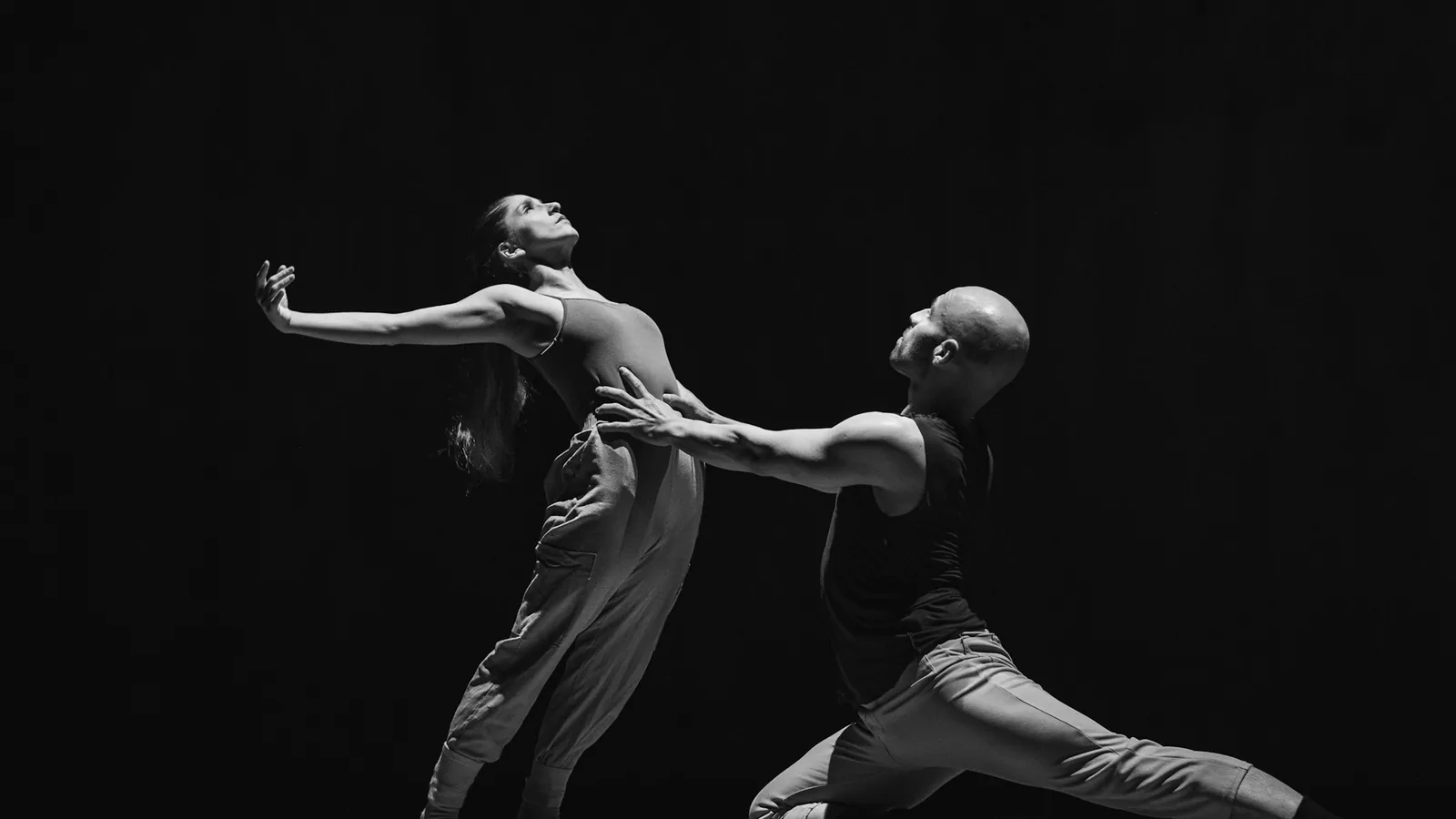
A familiar basic can take longer, change direction or move into another pattern earlier. Nobody has to invent a new move for this to happen. One possibility for improvising is to change the sequence; another is to perform the same movement differently.
The Brazilian Zouk repertoire includes basics such as Lateral and Viradinha. A Viradinha can, for example, become a basic variation with a change of direction. Linking several movements produces a combination. This distinction helps when considering your own dancing: having more material need not always mean knowing more separate patterns. It can also mean becoming more familiar with the variations and connections available within your existing repertoire. A learned combination already contains several movements and therefore material that you can continue to work with.
Keeping the continuation open
This involves knowing the transitions. Where does one movement end in a way that allows another to follow? In his ethnographic work on Argentine tango, Michael Kimmel describes familiar positions between dancers from which several paths become available. These transitions can also lie within a known pattern. A combination can then serve as a provisional plan: the beginning is familiar, while the continuation can change. Knowing these possibilities means you need neither plan the entire dance ahead nor invent every movement from scratch.
What happens also depends on your partner. Your idea can change even as you carry it out. Interviews and shared movement analyses with experienced Contact Improvisation dancers describe this as part of their creative practice: they pick up on what emerges through dancing together. Something new might be a way into a familiar movement or an almost invisible quality of its execution. Creativity then lies in how it happens. Someone watching cannot always tell what the dancers are discovering. A possible example: one person repeats a movement accent, and the other incorporates it while moving on.
This openness has a practical side. For Zouk writer Jukka Välimaa, variation rests on understanding the basic movement and how to communicate with your partner. A different direction requires a suitable transition; a different rhythm needs to remain workable together. An idea alone does not yet turn a variation into a shared movement.
Dancing with an open task
These possibilities can become something to explore together. In his degree thesis from Belém, Zouk teacher Evandro Maurício Sales da Costa describes a game based on the Corredor: other participants form a tunnel through which one couple at a time dances. The theme is given; movement possibilities within it are explored. The example comes from his own teaching practice. It illustrates a distinction between a set sequence and an open task: both provide direction, but the task leaves the solution to the dancers.
A framework can also sustain a longer development. In the Underscore, developed by Nancy Stark Smith, participants know the different phases of an improvisation practice. Within this framework, they create their own movements and encounters. This kind of score sets out an agreed structure without prescribing every movement. Participants learn their shared points of reference beforehand; dancing does not involve a new verbal cue for each movement. This practice has a different context from Brazilian Zouk. It nevertheless illustrates how a familiar framework can accommodate an open course of events.
Whether an instruction brings about different movements depends on its specific design. In a small study, three experienced Contact Improvisation dancers performed duets with different instructions about the distance between their pelvises. Keeping them further apart produced a greater variety of movement patterns over longer time intervals than dancing without an additional distance instruction. That difference did not appear over short intervals. The measure concerned visible movement, not the quality of the experience. This establishes neither a distance prescription for Zouk nor a rule that every constraint increases creativity.
Ideas for this encounter
A demonstration does not offer a complete benchmark for this either. An established partnership knows each other's movements and preferences; an empty floor offers different possibilities from a crowded party. Välimaa points to these differences in his essay on Zouk demos. During social dancing, the two people's experience levels may be very different. An eye-catching combination in a video therefore does not tell you what is possible with this particular partner. Choices depend on the actual encounter, the repertoire available between you and the space you have at that moment.