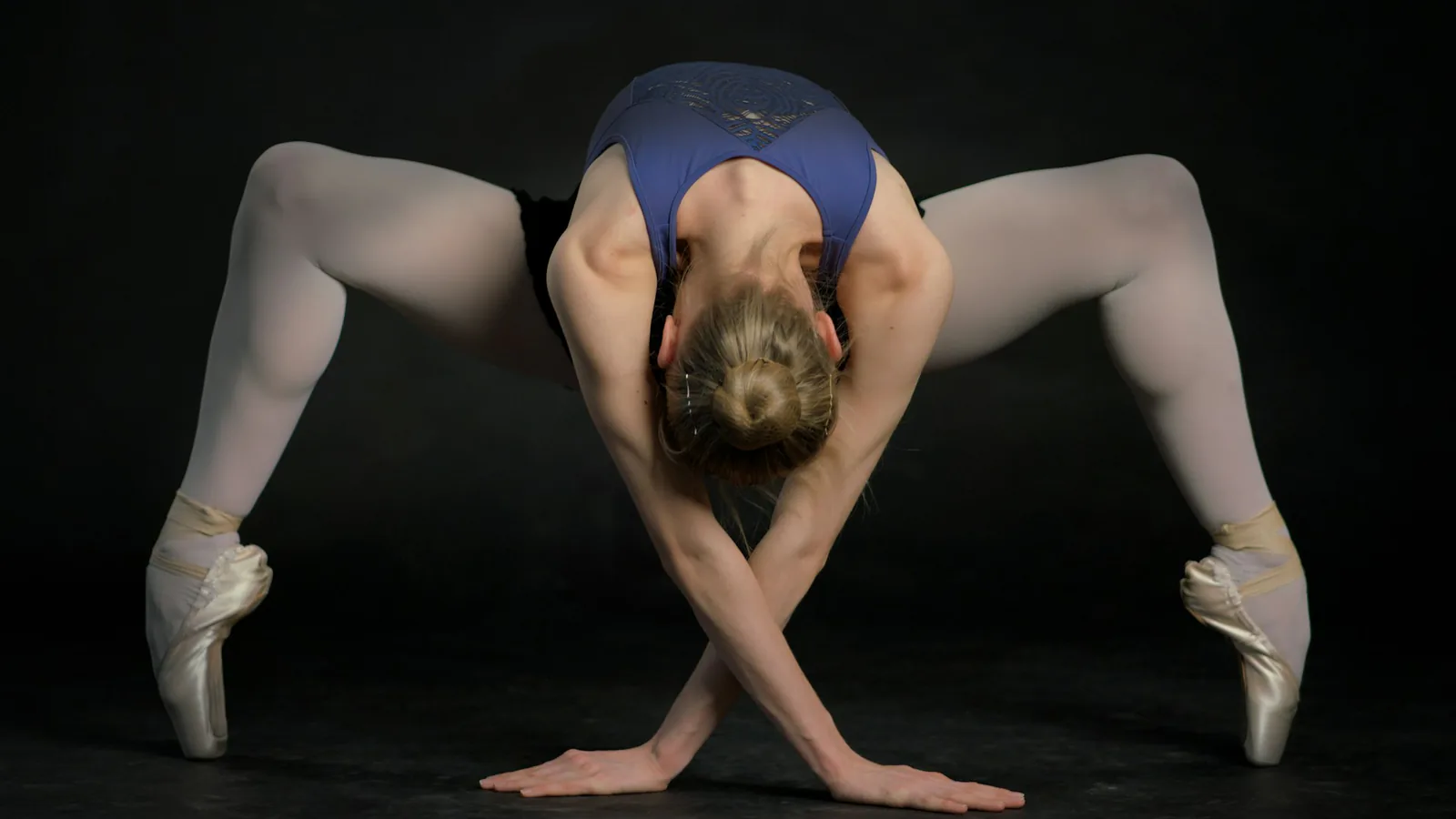
Imagine a dance with plenty that you like. The music carries you, a transition turns out surprisingly smooth, a small rhythmic idea fits beautifully. Then comes a turn that ends differently from what you had imagined. When the song finishes, that moment sits alongside everything else. How much weight should it carry? Can the dance have been lovely even though there is something you would change?
This question reaches beyond technical accuracy. It concerns the terms on which you allow your own dancing to count. Perhaps you want to give movement careful attention and are also tired of seeing only unfinished work at the end. Perhaps you like your ambition. Simply discarding it would hardly be what you want. What matters more is what that ambition asks of you and the kind of dancing you want to create with it.
The ambition behind the wish for perfection
Psychological research often distinguishes two aspects: striving for flawlessness and concern about being imperfect. These concerns include doubts about one's actions and harsh reactions to mistakes. The two aspects are often linked. A recent sport psychology review describes mixed findings on striving for perfection: favourable associations with performance sit alongside costs. Individual favourable associations do not make perfectionism advisable overall. The review mainly draws on sport research and offers no definitive assessment of every form of dance.
For personal reflection, the word perfection is surprisingly imprecise. In a set choreography, for example, it is possible to specify when an entrance is intended. An improvised encounter has no fully written sequence that both people merely have to execute without error. Both forms can still be demanding. The accuracy of a planned accent and the coherence of a movement discovered together are different qualities. Which one do you mean when you say that something should improve?
A big aspiration is allowed to stay big. Dancing a complex choreography convincingly or developing a more nuanced movement quality in Brazilian Zouk can be a compelling project. Yet the size of that project says little about how an individual evening should be judged. Between a long-term artistic vision and today's dance lie many possible decisions. An evening can have value in its own right without already delivering the finished result of that vision.
Eight detailed interviews with young dancers at a Swedish ballet school illustrate this complexity. The dancers were selected deliberately from a larger group. Their accounts connected high striving with careful work, sometimes also with rigidity. One dancer pursued ambitious goals while explicitly rejecting perfection as an ideal. This small qualitative study describes different experiences; it cannot determine which personality type is more successful or how recreational dancers feel.
A mistake is not a verdict on everything
Take a specific mismatch: during a transition, information between two dancers did not come across clearly. A limited statement can be made about that. Communication was unclear at that point. The sentence contains a moment in the sequence, a task and something that can be examined more closely. The judgment that the entire dance was bad contains considerably less information. It sounds larger while actually being less precise.
This distinction also means taking mistakes seriously enough to avoid treating them all alike. A missed musical accent differs from uncomfortable contact. An unplanned footstep differs from an ignored boundary. Consideration and safety call for firm standards. Aesthetic decisions, meanwhile, leave room for taste and different intentions. Placing everything under the same demand for perfection blurs precisely these differences.
There is room for disappointment here too. You do not have to pretend a passage worked in order to do justice to the rest of the dance. In the imagined dance at the beginning, two statements can hold at once: the turn was unsatisfying, and the song held a lovely shared moment. Neither statement has to disprove the other. A fair description may be more contradictory than a single grade for the whole evening.
The interviews also revealed different meanings attached to mistakes: some dancers moved past them readily, while others described doubt and avoidance. These differences argue against a single account of what drives ambitious dancers.
Which standard belongs to this dance?
A role model can reveal what interests you. Perhaps you are moved by a couple's clarity or their unhurried way of dancing through a transition. That does not yet provide a complete standard for your own body or your entire development as a dancer. You can admire a quality without turning every visible detail into a personal requirement. The more interesting question then is what exactly you want to understand or explore about that quality.
A short video clip has a clear boundary: it shows the selected clip. Initially, it tells you nothing about other attempts, the intention behind the recording or how the people involved felt. This is no objection to dance videos. It is a question about the comparison. When you set your whole dancing experience against a few seconds of someone else's, you are comparing different amounts of information. Treating the clip as inspiration requires far fewer assumptions about its participants.
Perceptions of the surrounding environment also deserve nuance. In a study of 271 young dancers in British talent programmes, greater concern about mistakes predicted a more evaluation-focused perception of the training environment six months later. The reverse direction was not confirmed for these concerns. The study collected self-reports rather than objective observations of teaching. This temporal association therefore establishes neither a clear cause nor that perceived pressure was merely imagined.
It is worth treating the standard itself as a choice. In a stage rehearsal, reliability within an agreed choreography may be central. In an improvised dance, the actual encounter and the music being played are part of the task. An assessment that recognised only a sequence imagined beforehand would leave out something essential. High standards need an object. Without one, what remains may simply be the demand that everything should somehow have been better.
Joy does not have to earn its place
Dance can be art, a craft, a leisure activity, a way of connecting, or several of these things at once. None of these requires enjoyment to be reserved exclusively as the reward for a flawless result. It can belong to the activity itself: to the sound, an interesting movement, the pleasure of dancing at all. This is a value judgment about why dance has a place in your life. It needs no performance assessment to authorise enjoyment afterwards.
Someone who loves precision can continue to work on details. Spending a long time with a movement can belong to the dancing life you want. The question is whether other choices have a place in it too. Can a rehearsal end for today? Can a familiar basic be enjoyable when more demanding variations are available? Can an evening contain no particular achievement? These questions prescribe no correct answer. They make visible the freedoms you want to allow within your own ambitions.
A compassionate response to personal difficulties means meeting yourself with understanding. An experiment with 86 Berkeley students offers limited evidence about motivation: after a difficult verbal test, participants receiving such a reminder studied longer than those receiving none. The difference from another encouraging message was inconclusive; better test results were not demonstrated. This was a brief laboratory situation, not long-term change in dancing. In this setting, kindness towards oneself was certainly not equivalent to reduced effort.
This also raises a question of respect: what language do you consider appropriate when something goes wrong? Calling an unclear transition unclear is precise. Treating it as proof of personal worthlessness goes far beyond the movement. You do not have to call your dancing magnificent to reject that kind of dismissal. Nor do you have to scold yourself for feeling disappointed. Even a kinder relationship with yourself should not become another discipline in which only flawlessness counts.
Your relationship with dancing can remain open
A later case study returned to two people from the Swedish interview group after five years. One dancer's standards had increased while his concerns about mistakes had decreased; the other still reported high standards with few concerns. She also challenged the earlier interpretation of her statements as rigid, emphasising the personally chosen meaning of her effort. These two cases establish no general trajectory. They do show why scientific descriptions must remain open to review and a person has more to say than an initial profile.
Even outside a study, a single label need not sum up your relationship with dance. Perhaps technical clarity remains important while an earlier idea of elegance loses its appeal. Perhaps a simple movement comes to mean more than a figure you dreamed about for years. A different artistic decision is not automatically a retreat. It may simply express the dancing you find interesting today and the questions that have since become more important to you.
That brings us back to the dance with the unsatisfying turn. It can remain part of the account. Alongside it stand the smooth transition, the rhythmic idea and everything that took place between two people during that song. A discerning eye need overlook none of this. Perhaps that is the more appealing idea of accuracy: doing justice to the entire dance, including what remains unresolved, and choosing for yourself what you want to pursue.