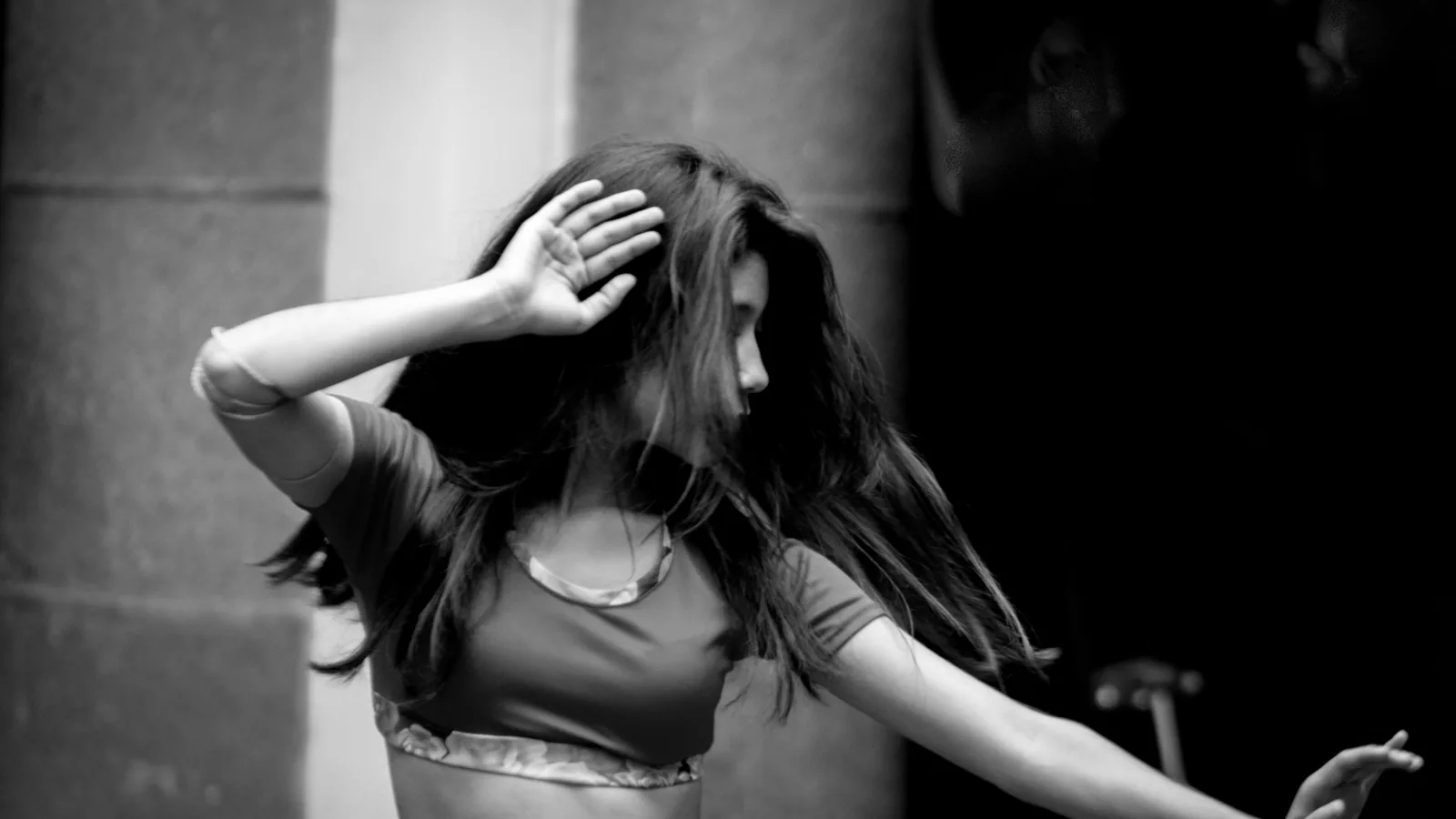
You can look for your own dance style in familiar movements: which parts do you want to keep, change or leave out? A large collection of patterns does not yet answer that. Role models offer material to draw on; what matters is which ideas you select and how you develop them. Learning and making your own choices can happen together.
Understanding a model more closely
When you imitate movement, its outward shape may already be recognisable while its dynamics remain unclear. Learners described this distinction in a qualitative study of five contemporary dance technique classes in Montreal. The researchers combined video analysis with interviews involving 18 learners. Some described how demonstration alongside explanation helped them understand movement. Others mainly recognised a shape and found its development harder to grasp. The study describes specific training settings. When considering a role model, it offers a useful distinction: what can you reproduce, and what have you understood about it?
That second question also concerns partner dancing. In 2014, zouk dancer Arthur Liebscher recalled learning many patterns and techniques without understanding how they fitted together. He wanted to know why a movement was performed that way and what gave it its particular feeling. He observed other dancers and studied knowledge of the body at university. A role model can therefore offer more than an appearance to reproduce: a movement whose workings invite investigation. Wanting to look the same can become a closer examination of what you have seen.
Making deliberate movement choices
For this, you can distinguish the action itself, its dynamics and its pathway through space. The British AQA dance specification uses this distinction, for example. Imagine the same arm pathway in two versions: one sustained throughout the available time, the other performed briefly and followed by stillness. The pathway remains recognisable while its timing changes. A wider or narrower pathway also creates a different emphasis. This gives you a particular quality to work with, rather than simply asking yourself to dance more expressively.
In Brazilian zouk, this leaves room to work on the basics. Zouk practitioner Jukka Välimaa argues that these remain open to development and need not look identical across dancers. A recognisable basic movement can therefore allow different executions. When something distinctive catches your eye in a role model, you can ask how much comes from the underlying organisation of the movement and where personal styling begins. This distinction helps frame your learning: a preferred appearance cannot replace an explanation of the movement, while a shared foundation does not require everyone to look exactly alike.
Selection turns possible changes into something of your own. Swing teacher Bobby White suggests developing particular features of borrowed material or combining influences. It also involves deliberately leaving possibilities out. Which choices do you still enjoy when you dance them repeatedly?
Influences come with a context
When combining influences, their origins deserve attention. Dancer Joana Saahirah describes developing a personal approach within the movement language she has learned in raqs sharqi. For her, thorough learning and personal musical interpretation belong together. You can build on this when borrowing: what interests you about a movement, and what context do you want to learn alongside it? A striking gesture alone cannot explain its significance within the dance it comes from. Exploring that significance can be part of your own artistic decision.
Individuality can also become visible when several people dance shared material. Tap dancer and choreographer Michelle Dorrance describes creating work around the particular strengths and characteristics of her ensemble members. She wants them to fulfil the choreographic task while bringing their own way of performing it. Her example shifts attention from a personal signature move towards how someone works with existing material. The shared and the individual need not be divided into fixed choreography on one side and optional embellishments on the other. Both can be present within the same movement.
A signature can keep changing
Becoming recognisable does not mean choosing the same solution every time. Christopher Bruce describes seeking a different movement language for each stage work and trying to avoid an overly generic vocabulary of his own. When reviving Ghost Dances, he also allows new casts to perform it differently, provided they preserve the work’s style and technical requirements. A personal signature can therefore also emerge in how someone changes material and responds to a task. This allows more flexibility than an unchanging trademark expected to fit every piece.