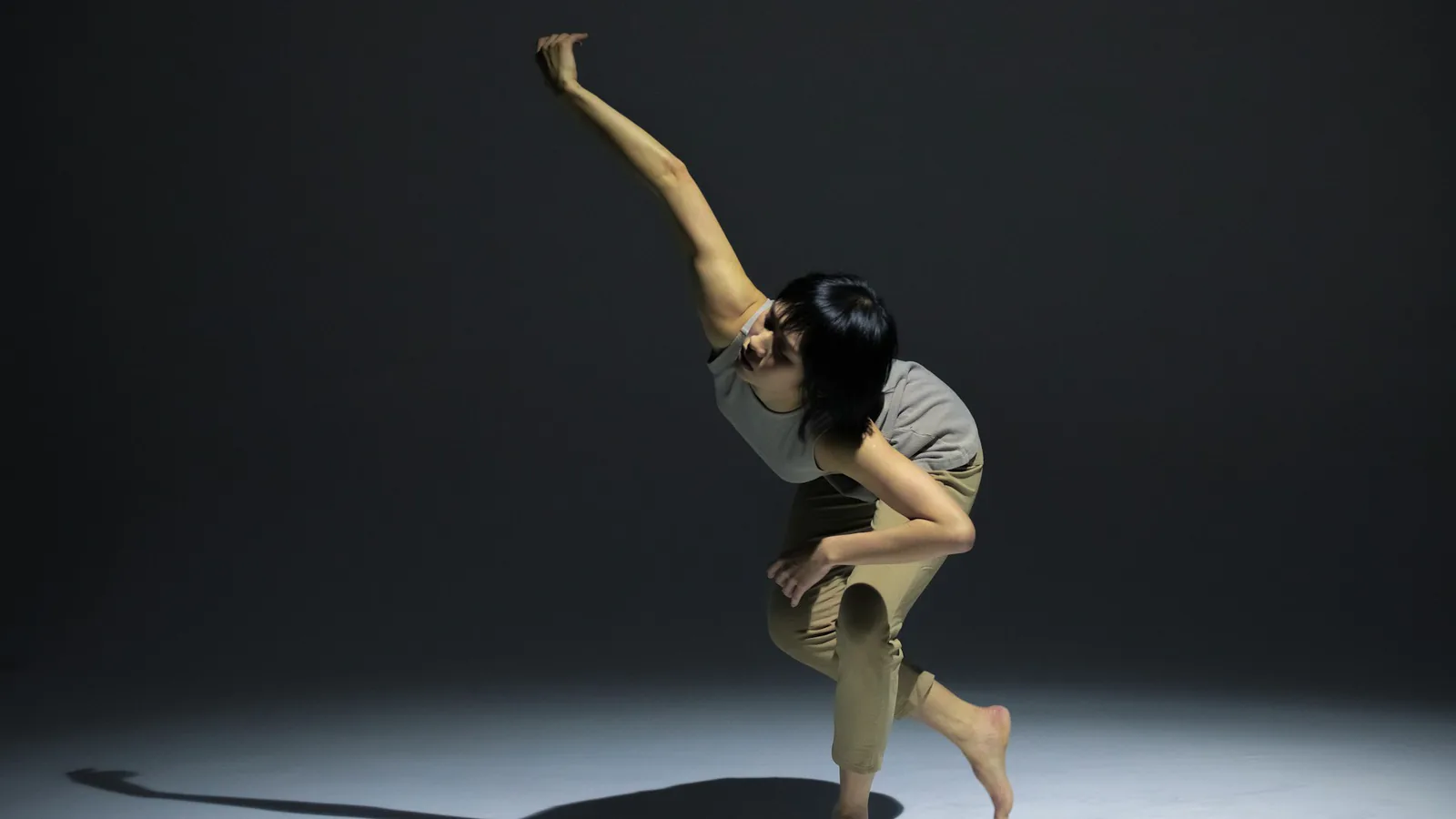
On your own, you can take time to work on your part of a dance movement: the path of your feet, a familiar variation or a passage where you regularly get stuck. You decide when to repeat it and what to pay attention to. A complete dance with another person brings further demands.
Tango teacher Veronica Toumanova describes this combination as attention to your own movement, the other person, music and space. Solo practice temporarily removes the need to respond directly to a partner. That lets you concentrate on a particular task.
Work more closely on a familiar movement
For Brazilian Zouk, Gui Prada and Julissa Hernandez at District Zouk describe a useful teaching approach: both roles first work separately on footwork and body movement, then come together for leading, following and connection. Their curriculum includes basics in place, along a line and to the side.
A basic variation you have already learnt is manageable practice material. Choose a version whose sequence you know and dance your own part. You can then practise without also having to decipher a new move or act out the other role.
The same variation gives you several details to work on. First, repeat it while paying attention to how you place and roll through your feet. On another repetition, follow the transfer of your weight. Foot movement and weight transfer belong together; observing each in turn gives your attention a specific subject.
West Coast Swing Online explicitly identifies footwork and weight transfer as subjects for solo practice. How the foot meets the floor and when the body travels depend on the technique. Use the execution you learnt for your variation; a WCS explanation is not a universal rule for Zouk.
Keep the aim of the repetition specific, too. Tango teacher Tomás Howlin recommends staying with one selected aspect during a practice session and noting what still needs attention. “I want to dance better” leaves many decisions open. “Today I am working on the transition into the sideways movement” identifies a passage you can actually examine.
Afterwards, describe the difficulty you observed as precisely as you can. You then have a concrete task to return to. If you are missing a technical explanation, identifying that gap is also a useful outcome of observing yourself.
Vary the task and observe what happens
Once you know the selected passage more closely, you can change one condition. In his WCS practice, Riley Anderson describes working on foot action in one direction, then in different directions, and later with different timing or tempo. The movement remains related while the task places a different demand on it.
For footwork you have already learnt, you might choose another tempo that you can still manage. Observe whether you retain the detail you were working on. This variation requires no new repertoire of moves. You are examining the same skill under changed conditions.
A short recording of yourself can provide another view of the execution. In her dance teaching at the University of Lisbon, Maria João Alves uses observation criteria identified in advance. One example is consistency of step length within a sequence that calls for it. The video is thus tied to a particular movement task.
Before watching, decide which visible feature you want to compare. Look at that passage and relate it to what you felt while dancing. Alves reports both newly noticed details and discomfort at seeing oneself. A recording does not require a verdict on your dancing as a whole.
What emerges when you dance together
Moving together involves information you cannot generate by yourself. In Andrew Sawers and his team’s laboratory study, pairs walked forwards and backwards without seeing each other, connected through handles fitted with force sensors. The leader knew the sequence; the follower relied on physical contact. They could coordinate unfamiliar sequences, too.
This was a simplified task, not a test of the effects of solo practice. It illustrates why a reliable individual sequence does not yet demonstrate successful coordination. When you dance together, your practised movement has an additional task: it must fit how the other person is actually moving.