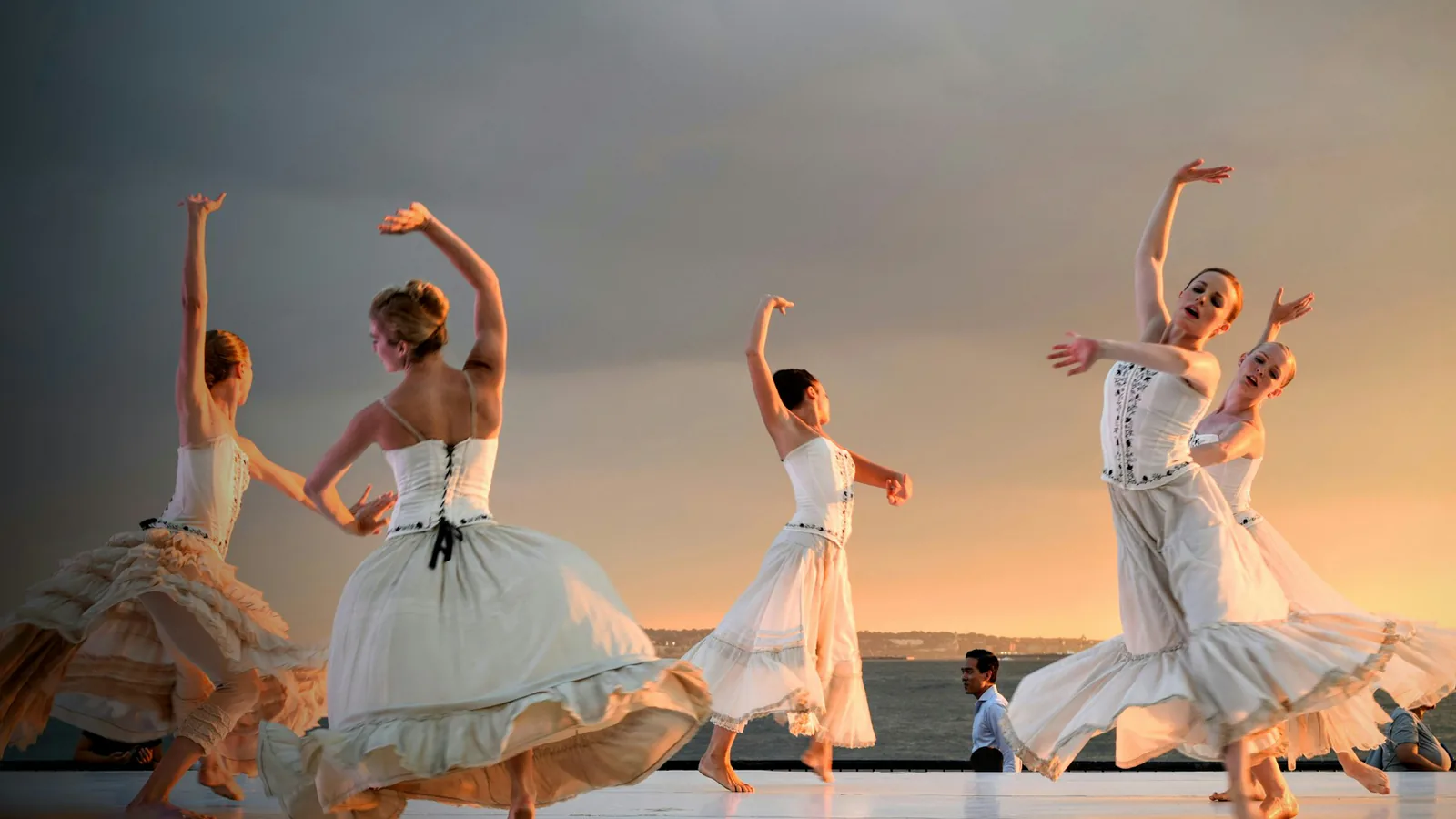
Perhaps you find yourself at a dance event next to someone decades younger or older than you. What would you talk about? A song, an unfamiliar variation, another dance style? A birth year cannot answer any of those questions. Dancing together offers a chance to discover what you might explore with each other.
Expectations about other generations
An image of the other group can exist before people meet. In the British project Generations Dancing, older adults and young people initially discussed their perceptions of each other in separate groups. These included different views of friendship. Preparatory exchanges brought those assumptions into view; participants later described changes in their perceptions. Experiences within a facilitated project do not promise that prejudices will disappear automatically. They offer a specific starting point: find out what matters to the other person before assigning them a generational role.
Age and dance experience are two different things. Someone might try Brazilian Zouk for the first time at seventy, while someone else has already danced for years at twenty-five. These examples establish no fixed distribution of ability. Ask about the person's experience of dancing. They might mention a style you have never tried yourself.
Who is learning from whom?
Learning can move both ways even when teaching roles are clearly defined. In a Toronto project, Mary Jane Warner described how student dance teachers reconsidered their teaching through working with older adults. Participants' suggestions and musical preferences became relevant. That qualitative account of work in progress directs attention to a simple question: is the learners' knowledge actually being heard? A teacher can take professional responsibility while remaining curious about the group's experiences. Age alone does not tell you which music someone enjoys dancing to.
An exchange need not be limited to dance patterns. For a series of conversations at The Place, artist Temitope Ajose deliberately brought together established and emerging artists. Her reflection describes an interest in different perspectives on their practice. Career stage and age are not the same, which makes asking about someone's particular path worthwhile. In dance, that could open a conversation about how musical preferences have changed, or why someone returned after a long break.
Making a dance together
An exchange can become a shared artistic task. In Barrowland Ballet's Scottish ensemble Wolf Pack, people aged eight to over eighty dance together. Established in 2016, the project uses improvisation and choreographic tasks. The age groups are part of both making and performing the work. One possibility for your own dance group would be to develop a short combination together: offer an idea, try it and decide together what to make of it. That gives participants a specific task which calls for their contributions.
Willow Green described the experience of an unfamiliar creative process after Dance Exchange's 2020 Winter Institute. New movement tasks were challenging, yet Green experienced the possibilities offered as invitations rather than ultimatums. This is one person's perspective on that workshop. It gives shape to an artistic question: how can people explore something new together while retaining room for their own expression? An improvisation could therefore allow several responses to the same task to remain. Nobody would have to demonstrate a supposedly typical movement on behalf of everyone their age.
Making it possible to meet
Shared time also needs planning. In a small Irish programme development project involving adolescents and older adults, young participants reported that starting shortly after school made travel difficult. An exam week affected attendance. This identifies a specific organisational problem for that group, rather than a generation's lack of interest. Anyone organising such encounters should ask about people's actual schedules. Collecting suggestions on paper and adapting the programme was also part of the project. Having a voice can then have a visible consequence: what changes in response to people's feedback?
You do not need to tell a grand story about generations to share a dance. You can begin by introducing yourselves and finding out what music you would like to hear today. If a new acquaintance or a shared project grows from that, you can pursue it. And if it remains just one dance, it can still involve two people whose most interesting connection at that moment was their wish to dance to this song.