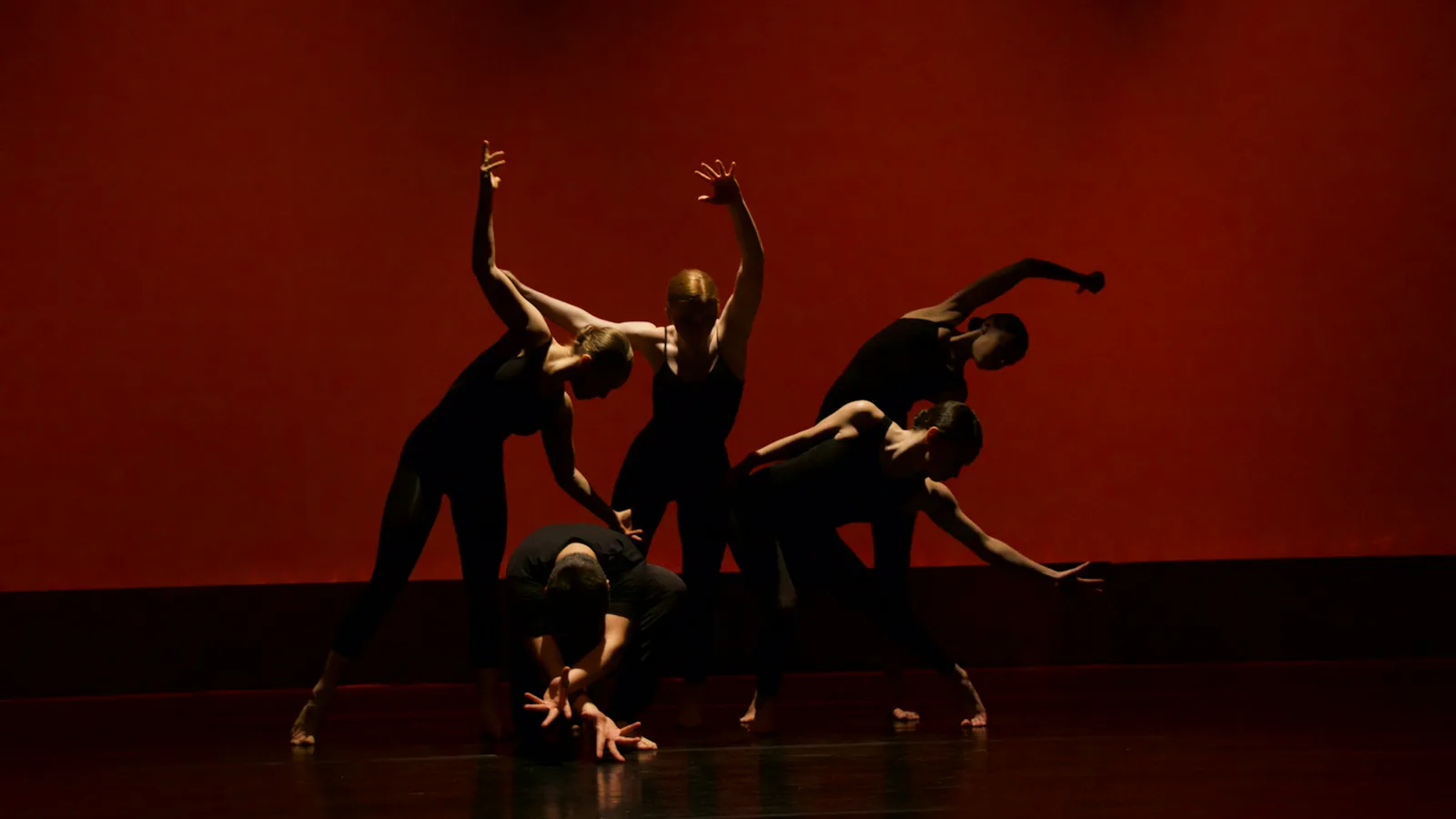
A dance photograph begins differently when people create an image together than when a camera accompanies a performance already underway. Photographer Jim Markland describes repeating movements in the studio until the result works. During a performance, that option disappears: he has to respond to events while leaving space for dancers and audiences. The kind of collaboration therefore matters before the shutter is released. An arranged shoot offers possibilities for shaping the image that differ from a performance taking place independently of the camera.
Creating an image together
A shoot can make room for the dancer's own ideas. Dancer and photographer Lee Gumbs describes working with Kirsten Wicklund, with whom he had previously toured. Their existing trust, he explains, made for a relaxed atmosphere. He also encourages dancers to bring something of themselves instead of wanting to reproduce another person's photograph exactly. There is a creative principle here: the person in front of the camera contributes to the image. Their individuality gives the collaboration direction; it need not disappear for the photograph to work.
That involvement can continue when looking at the image itself. 530 Dance Photography describes a monitor where dancers can compare details, select favourites and delete unsuitable photographs. Even after editing, images are only final with their approval. Between experiencing the movement and selecting its photograph, there is a shared review. The person depicted can help decide which image represents their work appropriately.
The camera on the dance floor
On a dance floor, the collaboration changes. Brad Whelan, whose work includes West Coast Swing photography, wants dancers to know he is there. He looks for expression and interaction, anticipating responses to his presence. He also describes a boundary: when someone loses connection with their partner to pose for him, he points the camera elsewhere. Attention can shift between the dance and its recording. In Whelan's approach, deliberately looking away is therefore part of photography too. That keeps the dance with a partner ahead of the next photograph.
Discussing recording and publication separately
Recording and public sharing need separate agreements. The Taiwan Zouk Festival’s 2025 media rules first call for filming people who want to be recorded during social dances. The video should be sent to them privately or published with their consent. An optional no-media wristband signals that the team should avoid targeted recording. Incidental appearances in the background remain possible under these rules. The wristband therefore does not promise that someone will be absent from every recording. Communication concerns both the intended use and what can actually be avoided during an event already in progress.
Participation arrangements deserve attention too. One Dance UK's guide for events involving young dancers says that lacking permission to be photographed should not exclude someone from dance opportunities. The organisation recommends explaining the purpose of recordings and considering discreet identification where appropriate. This reveals two organisational tasks: enabling participation in dance and handling people's images according to the agreements made. For a youth performance, this also involves communicating with parents or carers. Wanting to dance and the proposed use of an image each need attention during preparations.
An agreement also concerns the conditions in which images are created. In its published rules for the 2027 photography conference, Pas de Deux Photo requires dancer models' approval before publication. The organiser also addresses poses and camera angles, supervision of young models and a ban on privately arranged shoots with them during the conference weekend. These provisions concern an event that also works with minors. They connect decisions about finished images with the recording arrangements: who works with whom, and what supervision is planned? Approval belongs within that wider process.
Remaining available after publication
Uploading an image need not end the conversation. Lindy hop organiser Sam Carroll calls for photography websites to offer an easily found contact and promptly remove unwanted images when the person depicted requests it. Her proposed practice does not depend on photographers finding that person's reasons convincing. This gives personal choice weight even after an image has been selected and published. Someone who does not want to appear in a photograph should have a person they can reach. Collaboration then extends beyond the moment at the camera: the people in the image remain involved.