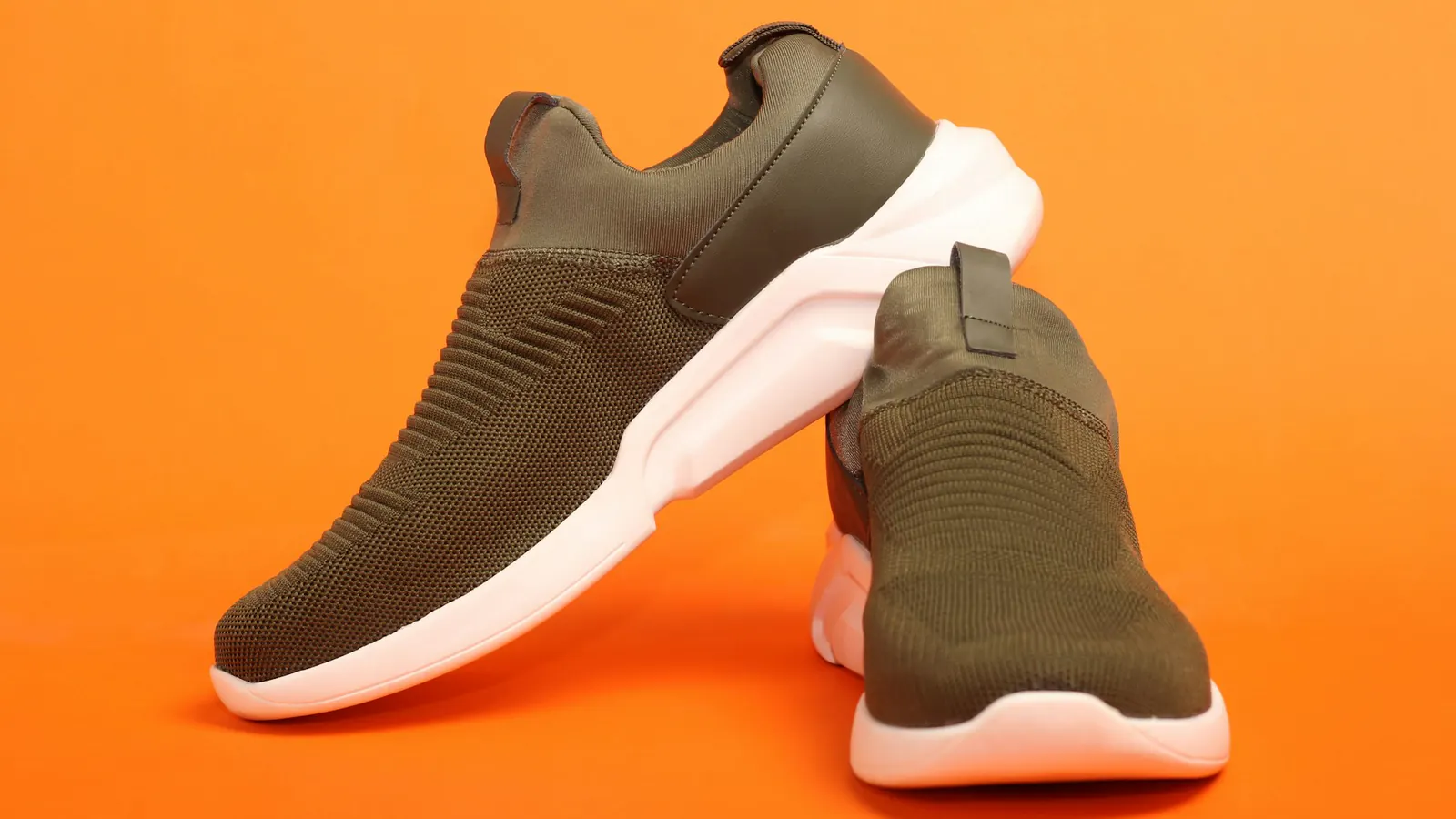
When you push off, your foot needs traction; when you glide, the sole moves across the surface. These involve static and sliding friction. Static friction resists an impending slip up to a limit. Sliding friction opposes surfaces already moving against each other. In a simple physical model, both depend on the pairing of materials and the force pressing them together. Grip is therefore a property of the shoe and floor together: the same sole encounters different conditions on different floors.
How accurately can we feel that resistance? Kei Shibata and Akihiro Ohnishi investigated this with 15 adults on lubricated test surfaces, using shoes fitted with the same smooth rubber sole. Depending on the test condition, seven to nine participants gave ratings that met the study’s criterion for correlation with measured friction forces. Participants rubbed a foot against the surface in a secured laboratory setup. The experiment did not involve dancing. A familiar feeling of glide is therefore no precise measuring instrument; the experiment cannot certify a dance floor as suitable either.
A secure fit
Inside the shoe, your foot needs room as well as support. Oxford Health’s foot care advice identifies adequate length and width, a firm fit around the heel and an adjustable fastening across the foot. Toes should neither be squeezed together nor have to curl to hold the shoe on. This distinction is useful when considering fit for dancing: a shoe can be tight yet fit poorly. The fastening matters for how it holds the shoe on your foot while leaving room for your toes.
Beneath the surface
A floor also has a structure beneath its visible surface. In the area-elastic dance floors described by Ausdance, a load-bearing deck spreads the load across a resilient supporting structure. The surface, meanwhile, helps determine how the foot grips and slides. Its requirements differ between dance forms. A grippy finish therefore tells you little about how the whole floor yields under load. To assess a dance space, you need information about both its surface and its supporting structure; the label “wooden floor” leaves those two questions unanswered.