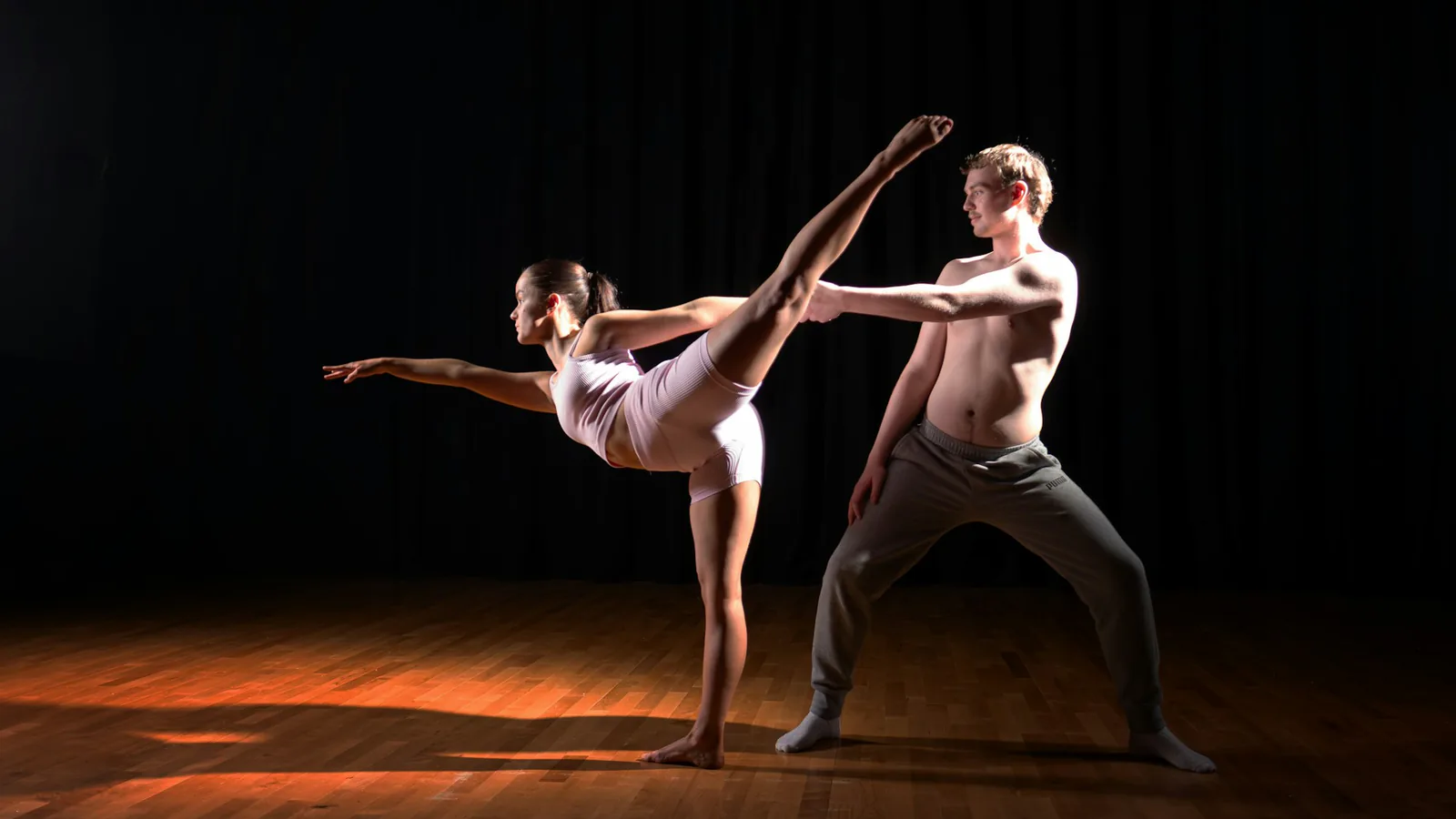
A performance does not have to determine every movement in advance. SW!NG OUT, a stage production featuring Lindy Hop, offers an example. Caleb Teicher describes improvisation as central to its composition. The responsiveness that creates a dance in social Lindy Hop has a place within the show. The distinction is therefore not simply between spontaneity and memorisation. Creating a performance also involves deciding how much room to give the unplanned.
Turning dance material into a piece
That decision begins with what you want to show. Writing about partner dance on stage, Brazilian choreographer Jomar Mesquita distinguishes familiar formulas for applause from an artistic undertaking whose outcome remains open. He also challenges being different at any cost. This offers a useful distinction when creating a choreography: an unusual variation needs a reason within the piece, just as a familiar figure does. Novelty alone does not explain the artistic choice.
Rehearsal material can therefore differ from the finished piece. Choreographer Jasmin Vardimon develops far more with her ensemble than audiences eventually see. A duet created for ALiCE did not belong in that production; it was later reworked for NOW. An effective passage need not fit every choreography. Putting a piece together also means considering what belongs with the other sections and what to keep for another work.
Rehearsing changes the view
That can be difficult to judge from within. While dancing with your partner, you cannot simultaneously see the whole scene from the auditorium. At Mimulus in Belo Horizonte, Sofia Seraphim documented ensemble members watching, taking notes and discussing scenes with the director. Jomar Mesquita himself moved between dancing and observing. This case study makes rehearsal tangible as a shared process of review: the performers also contribute to the view of the whole.
Learning a piece brings another task: recognising a sequence does not mean being able to perform it yourself. Gabriele Klein studied the transmission of Pina Bausch’s choreographies through rehearsal observations and interviews. Recordings helped dancers find their bearings but had limitations in conveying spatial relationships, for example. Working together combined speech and movement; the quality of execution was also passed on. Rhythm and accentuation were to remain, although different people were taking over the roles. This distinction matters in rehearsal: what comes next, and how is it done? A sequence and its qualities in performance are different things to work on.
Working with light and space
The stage can also change what stands out. In Seraphim’s Mimulus case study, a dancer describes how lighting gives different emphasis to two couples dancing simultaneously. Spatial perspective can also become part of the composition. In Vardimon’s Justitia, a revolving set with concealing elements changes what the audience can see of a situation. Staging shapes visibility.
These decisions have to meet the movement. A dance production chapter from Kent State University describes rehearsals devoted to spacing on the actual stage. In technical rehearsals, choreographers and lighting designers work with the dancers to establish when lighting changes should happen. These signals are called cues. Problems prompt a stop, a shared starting point and another attempt. The handbook describes one university’s practice. It makes the purpose clear: the performers are rehearsing alongside the lighting, sound and operators, finding their places within the running of the show.