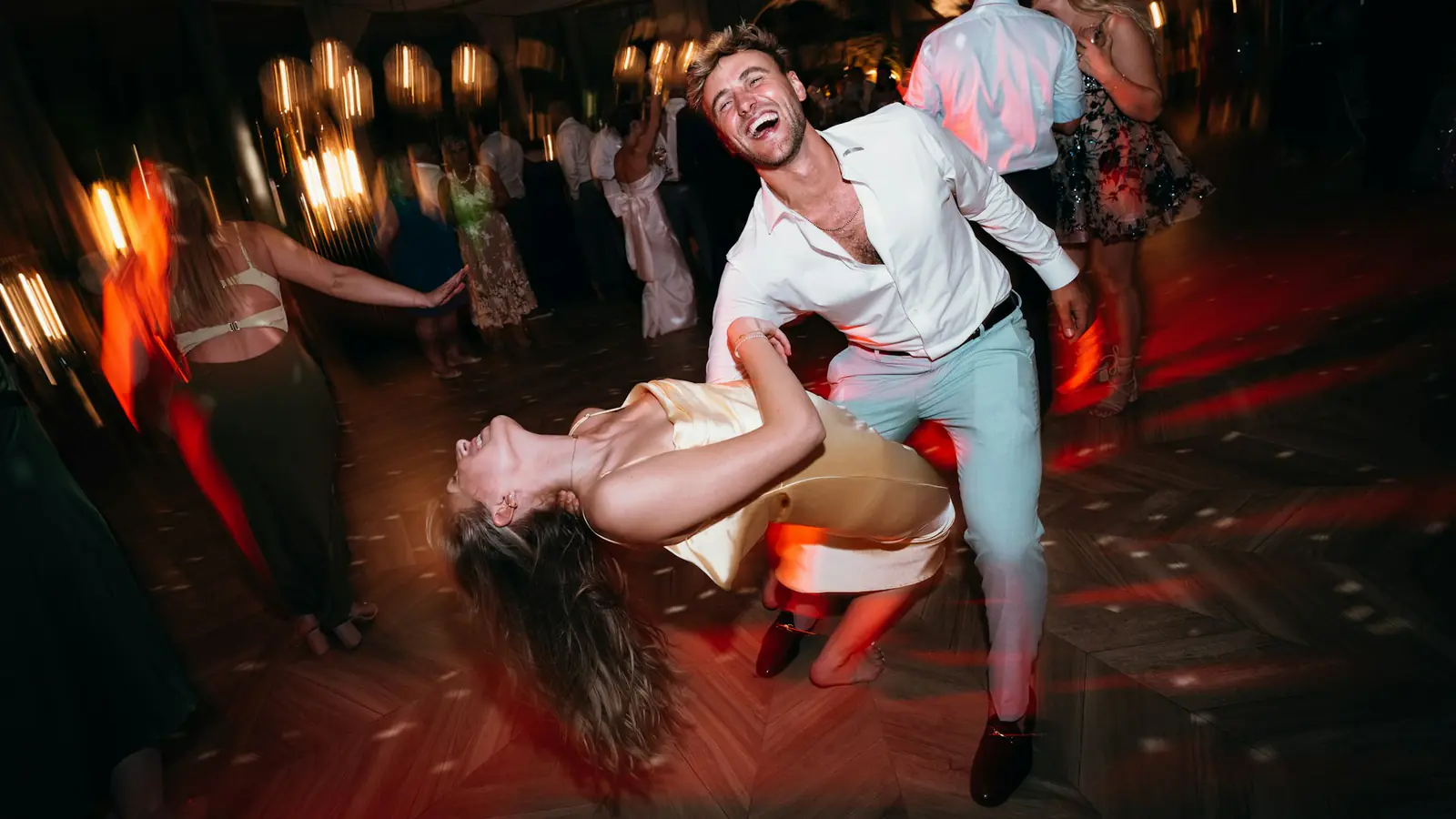
After a few songs, your T-shirt becomes damp, your forehead shines and a hand feels different from how it did at the beginning of the evening. Dancing puts bodies to work. In partner dancing especially, people come close enough to notice one another's warmth, clothing and smells. Something barely noticeable in everyday life can become quite apparent at this distance.
Personal care has a practical, interpersonal purpose here. You look after your own body while considering the person you are dancing with. That includes clean clothing and hands as well as a sensible approach to sweat or fragrance. An elaborate care routine is no prerequisite. It is more useful to understand what is happening and what can be changed with little effort.
Sweat does not tell the whole story
Sweating helps the body regulate its temperature. Moisture appearing on your skin while dancing is therefore an ordinary bodily process. The sweat mainly responsible for temperature regulation is normally odourless. Much of body odour develops when bacteria on the skin break down components of sweat, skin oils and keratin.
Moisture and smell are consequently different things. A T-shirt can be visibly wet without smelling strongly. Conversely, a worn garment can retain an odour even when it now feels dry. This helps explain why considering a fresh change of clothes is often more useful than trying to hide every sign of sweating. A dark patch on someone's back tells you little about how carefully they attend to personal hygiene.
Nor is the person beside you a useful measure of how much you should sweat. Temperature and physical activity influence sweating; the amount alone is no score for someone's effort or cleanliness. During an evening of dancing, your own awareness is more useful: have your clothes become uncomfortably damp? Would a short break feel good? Do your hands need a moment to dry? These changes can be an ordinary part of the evening.
Clothes need to work throughout the evening
Freshly washed clothes are a good starting point. If you come dancing straight from work or after a long journey, you can change when you arrive. This does not require a special dance outfit. A clean top that allows you to move freely already serves an essential purpose. The practical difference lies in the garment's condition and how it behaves on your body.
Over a long evening, a spare T-shirt can make a considerable difference. When the first top is soaked with sweat, a dry one provides a different surface between you and your partner. This is easy to understand wherever a hand rests on a back or shoulder. The right time depends on the evening. A fixed ritual after a particular number of dances would make little sense: a quiet evening and several physically active hours place different demands on clothing.
Freedom of movement also involves more than clothing size. A top can feel comfortable while you stand still, then become tight when you raise your arms. A waistband may slip during a turn; a sleeve can be wide enough for a hand to catch in it. A few familiar movements show whether a garment moves with you. You can keep your own style in the process. Neither close-fitting nor loose clothing is automatically the right choice for every person and every dance.
You can judge which fabrics you find comfortable by wearing them: how do the clothes feel once they become warm and damp? Do they remain comfortable, wash well and suit your movements? A material name alone cannot answer these questions. Familiar clothes from your own wardrobe may be entirely sufficient. After the evening, sweaty garments need washing and should have time to dry completely before their next use.
Skin needs a routine it can tolerate
A shower after sweaty activity, followed by thorough drying, can be a pleasant way to finish the evening. Mild cleansing products that your skin tolerates are suitable for this. Vigorous scrubbing or washing increasingly often can put additional strain on sensitive skin. Frequent handwashing can affect the skin's protective barrier; gentle cleansing and appropriate care therefore deserve attention alongside cleanliness.
While dancing, your own clean towel offers a simple way to pat away sweat. Especially on the face, gentle patting is kinder than repeated rubbing. The towel can then take a break too. Nobody needs to polish their entire face dry after every song. If there is no opportunity to shower, changing out of sweaty clothing is a practical interim measure.
A suitable routine can be quite unremarkable. A familiar product that causes no discomfort does not need replacing with several new ones for a dance evening. People whose skin is already sensitive bring those needs onto the dance floor. Persistent skin problems are a matter for professional assessment. They need not become a shared grooming rule, much less an invitation to judge visible changes in someone's skin.
Fragrance reaches beyond your own skin
A scent can be part of your personal style. In close contact, however, it also becomes part of someone else's surroundings. A smell you enjoy on your own wrist may be very intense for someone whose face is near your shoulder. In partner dancing, that distance matters more than how much perfume might be pleasant on another occasion.
Fragrances can trigger allergic contact reactions in susceptible people. Disliking a strong smell is not, in itself, a contact allergy. Both deserve consideration without anyone having to provide a medical explanation on the dance floor. Comfortable shared contact does not require agreement about which perfume objectively smells good.
A restrained approach to fragrance therefore makes sense for an evening of dancing in close contact. This includes avoiding a cloud of spray in the changing area or beside the dance floor. If clothing already smells strongly, changing it is an understandable response. Adding fragrance removes neither the moisture nor the worn garment. Whether to wear perfume at all remains a personal choice; its effect on people immediately nearby belongs within that decision.
Hands and breath are part of being close
Hands are frequent points of contact in partner dancing. They maintain a connection, release it and may meet several people over an evening. They also touch door handles, food or your own face. Handwashing can therefore follow ordinary occasions: after using the toilet, before eating and after blowing your nose. Water and soap should reach all surfaces for about twenty seconds, including between the fingers and around the thumbs, followed by drying.
This provides a workable everyday foundation. Every change of partner need not become another cleaning ritual. If your hands are damp from dancing, briefly drying them can make the next contact more comfortable. If you need hand cream, you can give it time to absorb. This also makes it easier to notice how your hands actually feel before you make the next connection.
For breath, the foundation begins before the dance evening. Regular oral care includes brushing with fluoride toothpaste twice a day for about two minutes and cleaning between the teeth. The tongue can be cleaned gently too. Sugar-free chewing gum after strong-smelling food can be helpful temporarily; it does not replace that care. A particular mouthwash is certainly not an automatic part of preparing to dance.
Bad breath can have various causes, including a dry mouth or problems with teeth and gums. If it persists for several weeks despite your own care, a dental assessment is sensible. On the dance floor, this chiefly calls for restraint in judging others. Neither the condition of someone's teeth nor a particular smell allows you to judge how they look after themselves.
Consideration without policing bodies
Personal care can easily become mixed up with ideas about what a body should look like. Such standards are of little help when dancing. Body hair, make-up or the colour of a top are no reliable signs of cleanliness. Practical questions are much more specific: are the clothes fresh? Can you move in them? Does the contact feel comfortable for both people? Attention can then stay with the situation at hand.
Consideration works both ways. You can change a shirt or use fragrance more sparingly. Equally, you can prefer more space or take a break. None of this creates an entitlement to a particular closeness. A well-cared-for body does not oblige anyone else to dance, and visible sweat is no reason for mockery or comments in front of others.
Venues can also make things easier. Accessible washing facilities with soap, somewhere to change and a place for personal belongings support quite ordinary needs. A spare T-shirt then need not become a big subject. You change, let your hands dry and return to a song you feel like dancing to.