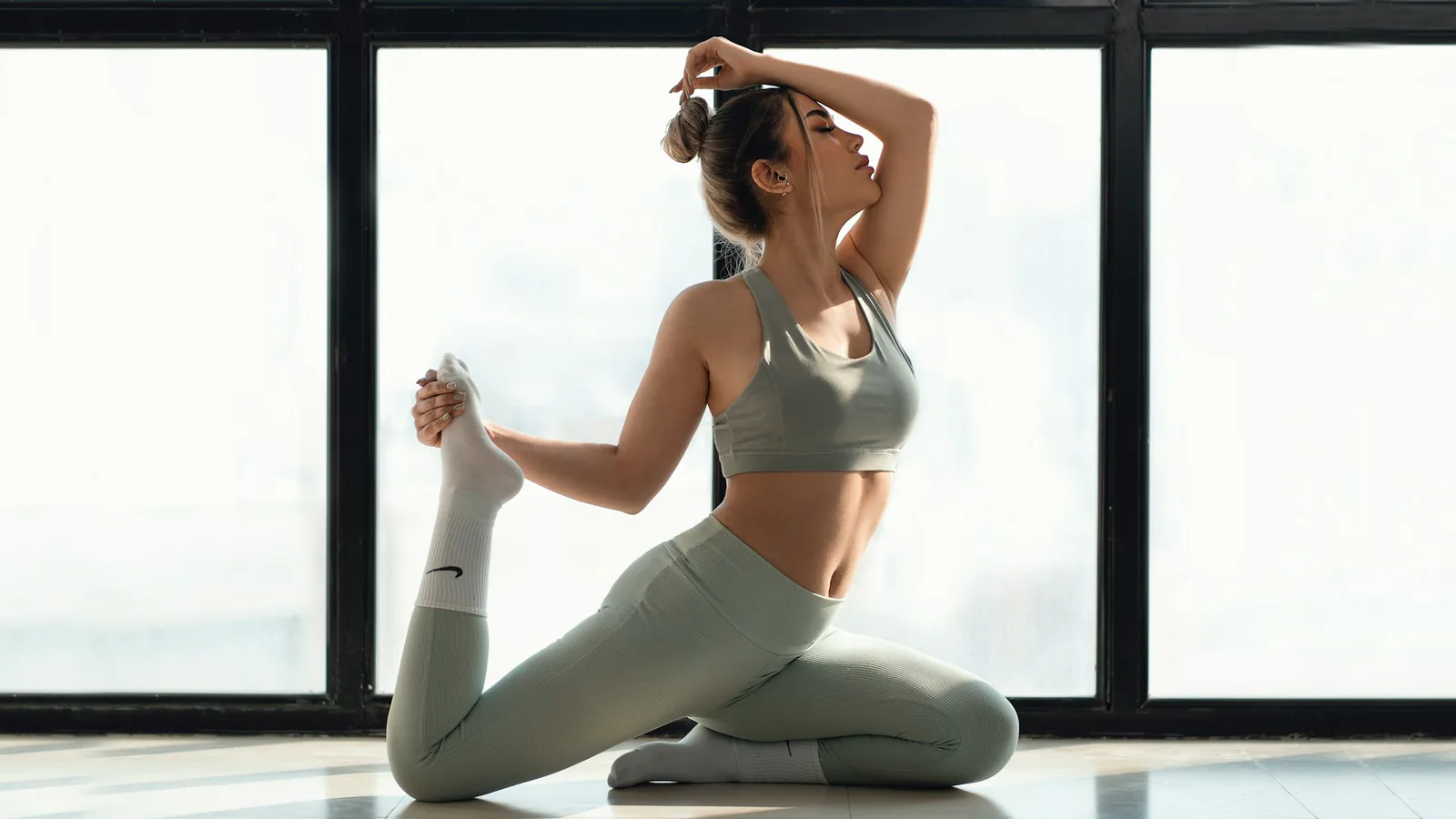
A movement can look effortless while still requiring strength. A body rises, lowers slowly, pauses for a moment and finds a new direction. Someone watching may notice a beautiful line or a musical accent above all. The physical work stays in the background. This is where strength training becomes interesting for dancers: in the physical capacities that help make different kinds of movement possible.
The idea quickly brings up two very different images: heavy weights and flowing dance. They do not have to contradict each other. The more interesting issue is what the training is meant to achieve. Moving a heavier load, sustaining a movement for longer and finely coordinating a shared transition are different goals. Keeping them distinct makes it easier to recognise the value of additional strength work.
Strength is also present when yielding
Muscles can shorten under tension, yield while lengthening, or maintain approximately the same length. These actions are called concentric, eccentric and isometric. Muscular work therefore also includes lowering a load under control and holding against resistance.
In dance, this directs attention towards the second half of a movement. Rising may be followed by a deep descent; travelling across the floor may end in deceleration. An accent can emerge precisely because the movement does not simply continue. These phases have expressive value of their own. A slow yielding movement can carry an entire musical phrase; it is more than an interval before the next obvious action.
A sustained shape and a rigid body are different things too. If a hand stays in one place while the upper body turns, the relationships between body parts change. One part appears quiet while movement happens elsewhere. When thinking about strength, the actual task is therefore more useful than a general image of tension throughout the body.
The nervous system adjusts muscle activation to the task. A high capacity for force does not require using all of it.
Which ability needs to change?
The word strength can conceal several different aims. Is the task to produce considerable force in a particular position? To accelerate quickly? Or to repeat an action over a longer period? The description already changes the yardstick. A brief lift and a sustained arm position can both be demanding without placing the same demands on the body.
For dancers, it helps to look beyond individual muscles. A change of direction has a time course, a direction in space and several joints involved. A partnered lift introduces different external forces from a weight transfer in which both people carry their own weight. Sharing the label partner dance does not create one uniform strength requirement. Even within a dance form, repertoire, movement size and personal ambitions differ.
This also gives capacity a more precise meaning. Here it means being able to meet the demands of the intended tasks under the relevant conditions. Completing an action once answers a different question from getting through a long rehearsal. The image of a universally resilient dancer is less useful. It leaves the movement, its duration and the person's current starting point undefined.
What dance research has actually measured
A 2024 review brought together 36 studies of supplementary training in dance, including ballet, modern and contemporary dance. Pooled results showed improvements in strength and jump tests. The differing assessments of aesthetic competence could not be pooled. Small samples, varied training methods and some weak study designs limit the conclusions.
Many participants were dance students or came from professional settings. Their demands do not automatically match those of a social. An improved test result is a specific physical finding; it does not establish a more comfortable connection in Brazilian Zouk.
This does not make the research irrelevant to partner dancing. It helps us ask two distinct questions: which physical capacity changes, and how does it enter the dance? A higher jump may matter greatly in a stage sequence. For a small, quiet transition on a crowded floor, the artistic value may lie elsewhere entirely. The task determines which kind of progress is worth pursuing.
Mobility and strength belong in the same body
The common idea that strength training inevitably makes someone inflexible does not fit the research. A 2023 meta-analysis of 55 studies found, on average, greater range of motion after resistance training than under control conditions. It covered different joints, training methods and populations. This establishes neither a particular dance line nor control of every newly available position.
Another distinction remains useful for expression: reaching a position, supporting it yourself and incorporating it into a moving sequence are three different tasks. An arm opened wide changes the outline of the upper body. How it arrives, how long it stays and how it moves on are also part of the movement. Greater reach alone leaves those questions unanswered.
Range of motion is therefore no competition for the largest shape. Sometimes a smaller movement fits the music or the shared distance more closely. Strength and mobility become part of expressive choice when the chosen form belongs to the dance. The aim can be thoroughly undramatic: shaping a familiar movement with greater attention to its whole course.
Strength training is a practice of its own
Resistance training asks muscles to work against resistance, for example from weights, machines or elastic bands. The 2026 position stand from the American College of Sports Medicine (ACSM) draws on 137 systematic reviews involving healthy adults. It confirms that various forms of training can improve strength and other physical capacities. The programme depends on the person's goals and starting point.
A review comparing free weights and machines found no winner across the outcomes studied. Strength test results depended partly on which equipment people trained with and were tested on. The studies generally lasted only a few weeks and did not examine competitive athletes. They cannot establish a superior choice of equipment for dancers.
The word functional only gains meaning in relation to a goal. An exercise does not have to resemble a dance figure to serve a well-chosen purpose. Equally, looking like dance does not explain its usefulness. Moving a resistance initially means practising that particular task under its own conditions. This, too, calls for understanding the movement and being properly introduced to the equipment.
Progression also means more than adding weight plates. In a 2022 randomised experiment, trained adults increased either the load or the number of repetitions over eight weeks. Thirty-eight people completed the study. Most changes were similar; differences in strength development remained uncertain. Jump height showed practically no improvement in either group.
This limited experiment illustrates different ways to change a training stimulus. It provides neither a permanently superior progression method nor a prescription for dancers.
The current ACSM recommendation also does not require continual training to muscular failure. Different programmes can support general progress. Regular strength work suited to the individual therefore does not have to be maximally complicated or exhausting in every session.
The dance week is part of the picture
Sports science distinguishes external load from internal load. Training duration and repetitions describe work performed; perceived exertion describes a response to it. The International Olympic Committee (IOC) consensus on load emphasises individual differences and the relationship with recovery. These concepts help make sense of training, but do not provide a reliable personal prediction of injury.
An hour in the calendar tells only part of the story. It might involve quiet attention to movement quality or a dense succession of demanding sequences. Additional strength training sits alongside this dance life. It takes time and attention that are then unavailable elsewhere. The useful question also concerns priorities: what needs developing during this period, and how much space should the supplementary work occupy?
Someone who dances for music and connection need not turn it into a second competitive sport. Equally, someone may enjoy strength training as a practice in its own right. Both motivations can be acknowledged without immediately justifying every improvement in the gym as an improvement in dance. In everyday life, supplementary training has to find a place within the life that actually exists.
Strength remains in service of movement
The relationship becomes especially clear in a partnership. When both people move their own weight, the shared task is not to push or pull each other as forcefully as possible. Direction, timing, distance and the form of contact matter. Greater strength does not dictate these choices. A very strong person can still choose a small movement.
This offers a clear and appealing way to view supplementary training. It can attend to physical capacities while dance retains its own richness. Whether a movement moves us, unexpectedly fits the music or feels right with another person cannot be read from a weight on a bar. Strength can be among the prerequisites. The dance is shaped by everything that comes together in that moment.